

By David Miguel on Jan 2, 2026

Professional services marketing is different to ecommerce or local clinics. You are not selling a product with an instant checkout. You are selling trust, expertise, and a commitment that usually involves a longer decision cycle and multiple stakeholders.
That changes what “good marketing software” means.
For consultants, agencies, accounting firms, law practices, engineering firms, and advisory businesses, the highest-performing stack is one that:
- Captures intent early (even when someone is “just researching”)
- Structures follow-up without relying on memory or manual admin
- Makes it easy to book a first conversation
- Proves which channels and content actually drive revenue
- Supports a sales process built on relationships, not promotions
This guide outlines a practical, minimal stack that supports lead generation, nurturing, conversion, and reporting for professional services businesses without unnecessary tools or complexity.
1. CRM and pipeline management – HubSpot CRM (or Pipedrive)
In professional services, the CRM is the system that determines whether leads turn into revenue. It does more than store contacts. It defines how enquiries are qualified, how opportunities are progressed, and how consistently follow-up happens across the team.
Why HubSpot is the recommended default
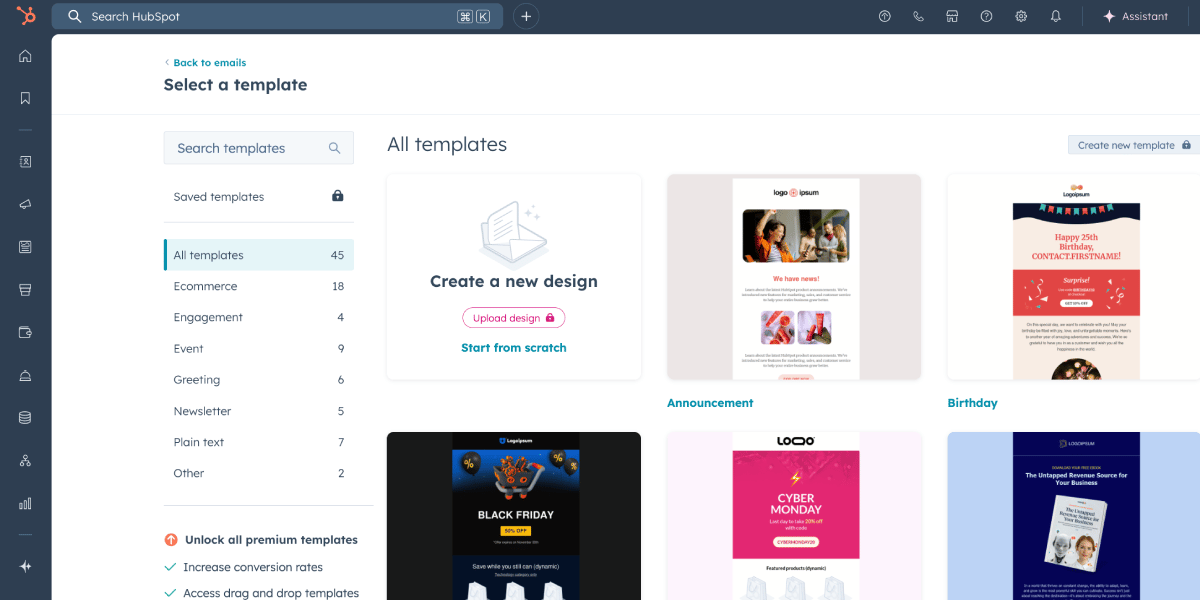
HubSpot works well for professional services because it combines CRM, sales pipeline management, marketing automation, and reporting in one platform. That matters when your growth model depends on content, referrals, events, LinkedIn, and inbound enquiries all feeding into the same pipeline.
HubSpot is especially strong when you need:
- Enquiry capture from multiple sources (forms, chat, emails, meetings)
- A clear lifecycle model (lead, MQL, SQL, opportunity, client)
- Structured follow-up (tasks, sequences, reminders, automated nurture)
- Visibility across marketing and sales performance, not just one or the other
It is also one of the better options when multiple team members touch the same opportunity (partners, client directors, consultants), because timeline history and deal activity tracking reduces handover loss.
When Pipedrive can be the better fit
Pipedrive is often the best choice for smaller firms that want clean pipeline control without investing in a broader marketing suite. It is usually easier to roll out quickly, and it works well when:
- The firm has a clear sales motion (enquiry, cal, proposal, close)
- Marketing automation is handled elsewhere (e.g., email platform)
- The priority is sales discipline and deal visibility, not complex nurture
The main point is this: professional services businesses do not need a “CRM for storing contacts”. They need a pipeline system that enforces consistent follow-up, protects lead response time, and tracks conversion from first touch through to signed work.
Business impact
- Higher enquiry-to-meeting conversion through faster, consistent follow-up
- Reduced lead leakage during handover between team members
- Clearer pipeline visibility for forecasting and resourcing
- Better qualification and prioritisation of leads based on fit and intent
- Improved reporting on where work actually comes from
2. Website and conversion platform - Webflow (or WordPress if you need speed-to-launch)
Your website is your credibility layer and your lead capture layer. In professional services, prospects typically evaluate you before they contact you. They read your service pages, scan proof (case studies, logos, credentials), and look for clarity on how you work. The website needs to support that evaluation journey.
Why Webflow is often recommended
Webflow is a strong fit for professional services because it allows firms to publish high-quality content and landing pages with speed, stability, and strong SEO foundations, without turning the site into a plugin-dependent maintenance project.
Webflow works well when you want:
- Fast performance and clean technical SEO
- High-control layouts for service pages and case studies
- Easy creation of location/service variations (for search demand capture)
- Predictable hosting and security without ongoing patchwork
It is particularly useful for firms building out topical authority through content, because you can maintain consistent templates and internal linking structures across service pages, insights, and case studies.
When WordPress makes more sense
WordPress is still viable when you need rapid launch, lower up-front cost, or access to a specific plugin ecosystem. It can perform extremely well for SEO when implemented properly, but it requires stronger governance to avoid site bloat, performance issues, and inconsistent page quality.
Either way, the website’s job is not to “look modern”. It is to:
- Communicate value clearly
- Prove credibility quickly
- Convert intent into action (call, form submission, booking)
- Support search visibility for service-based demand
Business impact
- Higher conversion rates from inbound traffic through clearer messaging and UX
- Increased organic search visibility for service-specific keywords
- Faster publishing of content, landing pages, and case studies
- Lower long-term maintenance overhead (especially with Webflow)
- Improved lead quality through better pre-qualification content
3. Lead capture and meeting Booking – Calendly (or Chili Piper)
For professional services firms, the moment between a prospect deciding to make contact and actually speaking to someone is one of the most fragile points in the entire growth process. Delays, unclear next steps, or unnecessary back-and-forth emails regularly cause high-intent leads to go cold before a conversation ever happens.
A structured meeting booking layer removes that friction.
Calendly and Chili Piper both solve the same core problem: they turn inbound interest into confirmed meetings automatically, without relying on manual scheduling.
Why Calendly is the default choice
Calendly is recommended for most professional services firms because it is simple to deploy, easy for prospects to use, and integrates cleanly with major CRMs and calendars. It allows firms to:
- Offer specific meeting types (intro call, discovery, consultation, audit, etc.)
- Route bookings to the right team members based on availability
- Enforce buffer times and qualification rules
- Automatically create CRM records and follow-up tasks
From a prospect’s perspective, this creates a clear and professional first interaction. From the firm’s perspective, it protects speed-to-lead and ensures no enquiry sits idle in an inbox.
When Chili Piper is often the better option
Chili Piper becomes valuable for larger teams or higher-volume inbound flows where meeting routing needs to be automated based on rules such as company size, location, service type, or partner availability. It is especially useful for firms running structured inbound programs with sales development teams and multiple pipelines.
The key principle is not which tool you choose. It is ensuring that every inbound enquiry has a defined, automated path to a meeting.
Business impact
- Faster response time to inbound enquiries
- Higher enquiry-to-meeting conversion rates
- Reduced manual scheduling workload
- Improved prospect experience
- Clearer pipeline creation and tracking
4. Marketing automation and lead nurture - HubSpot Marketing Hub (or MailerLite)
In professional services, most prospects are not ready to engage the first time they encounter your firm. They research, compare, wait for internal approval, and often return weeks or months later. Without a structured nurture system, those prospects disappear quietly rather than progressing through your pipeline.
A marketing automation layer ensures that early-stage interest is captured, educated, and guided toward a sales conversation over time.
Why HubSpot Marketing Hub is often the preferred option
HubSpot Marketing Hub integrates directly with the CRM and sales pipelines, allowing marketing and sales teams to work from the same dataset. This matters in professional services because multiple channels contribute to the same opportunities: content, referrals, LinkedIn outreach, webinars, events, and inbound search.
HubSpot enables firms to:
- Build automated email sequences based on lead status and behaviour
- Trigger follow-up workflows after form fills, content downloads, or meeting bookings
- Segment contacts based on firm size, service interest, and engagement level
- Score leads to prioritise sales follow-up
- Track content performance against pipeline and revenue outcomes
This creates a continuous progression path from first enquiry to qualified opportunity rather than isolated campaigns.
When MailerLite is the better fit
MailerLite is often the right choice for smaller firms that want structured follow-up and client communication without implementing a full marketing suite. It provides:
- Simple automation sequences
- Segmentation and tagging
- Broadcast campaigns and newsletters
- Basic behavioural triggers
It is typically used when lead volumes are lower and the sales process is more relationship-led rather than system-led.
Regardless of platform, the goal of this layer is to ensure that no prospect is lost due to lack of follow-up or inconsistent communication.
Business impact
- Increases lead-to-opportunity conversion rates
- Shortens sales cycles through structured education and follow-up
- Improves visibility of marketing contribution to pipeline
- Reduces reliance on manual follow-up
- Creates predictable flow of qualified conversations
5. Visibility and Demand Generation
LinkedIn + Google Search + Local SEO
Professional services growth depends on being visible at the moment a buyer begins researching solutions. Unlike retail or clinics, these searches are rarely transactional. Prospects look for expertise, proof, and clarity long before they make contact.
This visibility layer focuses on capturing both active intent and professional discovery.
Google Search and SEO
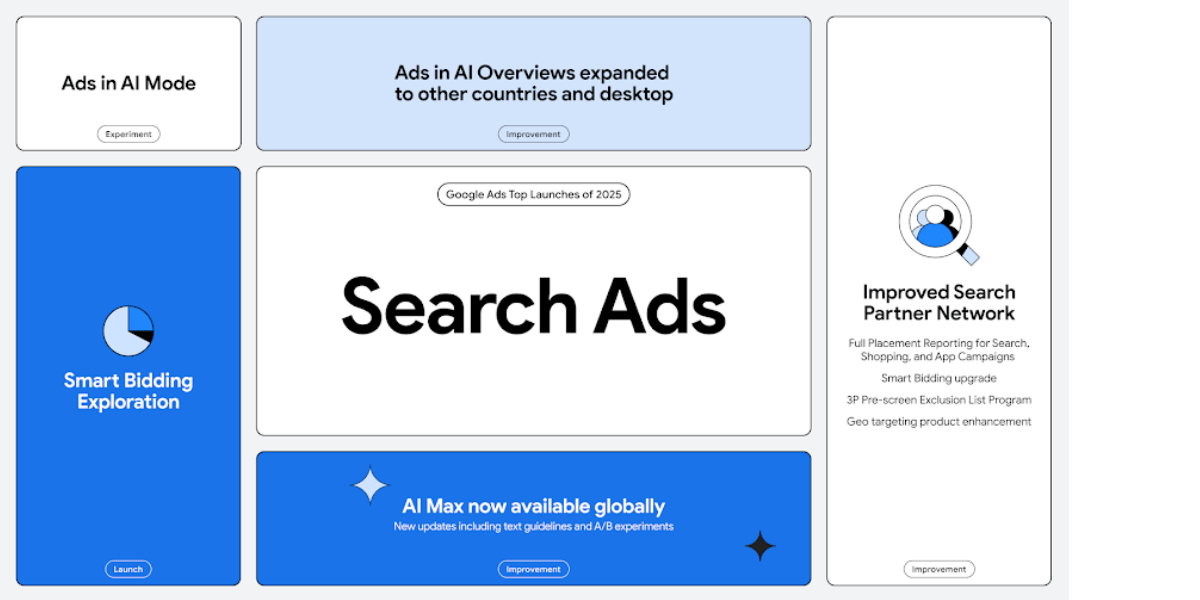
Google Search captures high-intent demand such as “accounting firm for manufacturers,” “cybersecurity consultant,” or “marketing agency for healthcare.” These searches come from buyers who are already aware of their problem and are actively evaluating providers.
A strong search layer requires:
- Service-specific landing pages
- Industry-specific case study pages
- Location-based pages (where relevant)
- Structured content that answers buying questions
- Clear conversion paths into meetings or enquiries
Over time, this creates a predictable inbound enquiry channel that compounds rather than resets each month.
LinkedIn functions as the primary discovery and authority channel for B2B professional services. It supports:
- Thought leadership distribution
- Retargeting website visitors
- Job-title and company-based targeting
- Account-based campaigns for high-value prospects
LinkedIn rarely converts first touch. Its value is in warming buyers, reinforcing credibility, and supporting longer buying cycles.
Local SEO (where applicable)
For firms that serve defined regions, local SEO ensures visibility in location-based searches and Google Maps. This includes Google Business Profile optimisation, review generation, and consistent business citations.
Business impact
- Increases inbound enquiries from high-intent searches
- Builds long-term organic visibility
- Supports account-based and retargeting strategies
- Reduces reliance on outbound prospecting alone
- Creates compounding authority and brand credibility
6. Reporting and Revenue Visibility
GA4 + Looker Studio + CRM Reporting
Without clear reporting, professional services marketing becomes subjective. Teams know leads are coming in, but they cannot reliably see what is driving qualified pipeline and signed work.
This reporting layer creates clarity across acquisition, pipeline, and revenue.
GA4
GA4 tracks how visitors arrive, what content they engage with, and which actions they take before converting. It provides visibility into:
- Traffic sources and channels
- Content performance
- Conversion paths
- Engagement trends
Looker studio
Looker Studio consolidates GA4 and CRM data into dashboards that show:
- Enquiries by channel
- Cost per lead and cost per meeting
- Conversion rates by service and campaign
- Pipeline contribution by source
CRM reporting
CRM reporting closes the loop by showing which leads become opportunities and signed clients, enabling accurate ROI and forecasting.
Business impact
- Clear attribution of pipeline and revenue to marketing activities
- Better budget allocation and forecasting
- Reduced wasted spend
- Visibility into service-level performance
- Confident, data-driven growth decisions

Closing thoughts

Professional services firms do not grow by adding more tools. They grow by building systems that make lead generation, qualification, follow-up, and reporting consistent and measurable.
The stack outlined provides a practical foundation for doing exactly that. Each platform plays a defined role in how prospects find you, engage with your expertise, become qualified opportunities, and convert into signed work. When these layers are designed to work together, marketing becomes predictable, sales processes become easier to manage, and growth becomes less dependent on individual effort.
Choosing the right stack is not a technology decision. It is a growth decision. The right architecture reduces friction, improves visibility, and gives your firm the ability to scale without increasing complexity or operational risk.
Frequently asked questions
What is a marketing technology stack?
A marketing technology stack is the collection of software, platforms, and digital tools a business uses to plan, execute, automate, and measure its marketing activity. It forms the operational backbone of modern marketing, connecting data, workflows, and performance reporting across channels.
Why do professional services firms need a marketing tech stack?
Professional services firms rely on trust, expertise, and long sales cycles. A structured marketing tech stack enables consistent lead generation, automated nurturing, better client insight, and clear attribution between marketing activity and revenue.
What are the core components of a professional services martech stack?
A typical stack includes a CRM for contact and pipeline management, a website or CMS for content publishing, marketing automation for email and lead nurturing, analytics tools for performance tracking, and paid or organic visibility platforms to drive traffic.
How do I choose the right tools for my marketing stack?
Start with your growth goals, then map the workflows required to achieve them. Choose tools that integrate cleanly, remove manual effort, and provide visibility across the full lead lifecycle. Avoid overlapping platforms and audit your stack regularly.
What is the difference between martech and adtech?
Martech manages owned channels, leads, automation, and customer data, while adtech focuses on paid media buying and audience targeting. Both are important, but martech forms the system that converts traffic into pipeline and revenue.
How can I measure whether my marketing stack is working?
You can measure success by tracking metrics such as lead volume, conversion rates, pipeline contribution, cost per lead, client acquisition cost, and revenue attribution. Your stack should clearly show what is driving growth.
How often should I review or audit my tech stack?
Marketing stacks should be audited at least annually to remove unused tools, improve integrations, and ensure workflows match current growth goals. Fast-growing firms may benefit from quarterly reviews.
Can small professional services firms use a marketing tech stack?
Yes. Smaller firms often benefit the most from a simple stack because automation reduces manual work and improves consistency. A lean stack can generate predictable leads without large teams.
What role does automation play in a marketing stack?
Automation powers lead nurturing, segmentation, follow-ups, scoring, and reporting. It ensures prospects receive relevant communication at the right time while giving teams full visibility over pipeline health.
What are the most common mistakes when building a marketing tech stack?
Common mistakes include buying too many tools, poor integration between platforms, lack of reporting visibility, and failing to align the stack with revenue goals. A lean, connected stack always outperforms bloated systems.

How to Choose the Best Sales Funnel Software in 2026
Choosing the best sales funnel software in 2026 to improve your conversion rate and streamline your sales processes.

Maximize success with small business B2B lead management strategies
Learn how small businesses build a scalable B2B lead management system using CRM software, automation and proven growth workflows.

Social media lead generations tools to be using in 2026
Find out how to maximize social media marketing for lead generation in 2026 with essential tools and strategies to accelerate your growth.