

By David Miguel on Dec 23, 2025
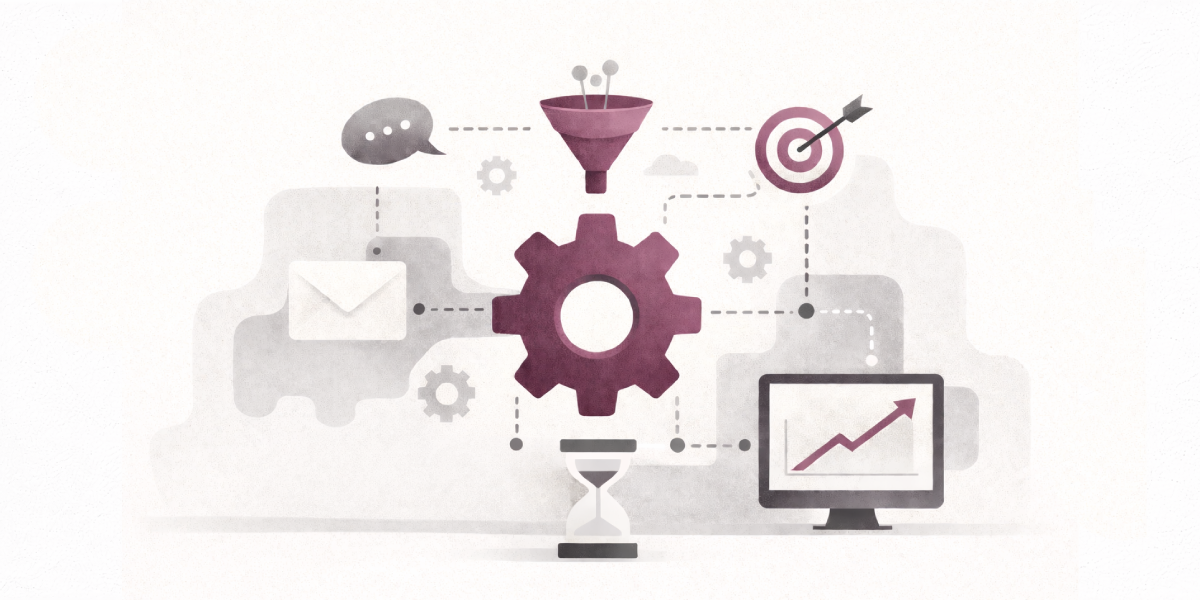
Marketing teams are expected to do more with less: more channels, more campaigns, more reporting - without adding more headcount. That’s exactly where marketing automation earns its keep.
The right platform helps you:
- Nurture and qualify leads without manual follow-ups
- Deliver timely, relevant messages across email, web, and other channels
- Give sales a cleaner, more actionable pipeline
- Prove what’s working with clear attribution and reporting
Below, we’ll walk through nine well-known marketing automation platforms, what they’re best at, and a few practical considerations for choosing between them.
How to choose marketing automation software
Before you look at individual tools, get clear on:
-
Your primary use case
Lead nurturing? Product-led growth? Content promotion? Sales enablement? Different tools excel in different areas. -
Team size and technical comfort
Some platforms are “set it and forget it” for lean teams. Others assume a dedicated ops function or admin. -
Data & CRM stack
You’ll save a lot of pain by choosing automation that plays nicely with your existing CRM, analytics, and advertising tools. -
Channel mix
Are you primarily email-led, or do you also need SMS, in-app, push, direct mail, or call tracking? -
Budget & pricing model
Most tools price on contacts, emails sent, or features. Make sure it scales realistically with your growth.
With that in mind, here’s a breakdown of nine platforms that consistently show up in marketing teams’ shortlists.
1. Customer.io - Best for Product-Led, Behavioural Messaging
Customer.io is built for companies that want to trigger communication directly from user behaviour—especially SaaS and product-led growth businesses.
Where it shines
-
Strong event-based automation: send messages based on signups, product usage, account changes, and more.
-
Multi-channel support, including email, in-app, push, and SMS.
-
Flexible segmentation so you can target users by behaviour, attributes, and lifecycle stage.
-
Good fit for teams that have a data-mature product and engineering culture.
Consider if
You want fine-grained control over behavioural triggers and are comfortable working with events, webhooks, or basic dev resources to get the most from it.

2. HubSpot - Best All-in-One Inbound & CRM Platform
HubSpot is often the default choice for teams that want marketing automation and an easy-to-use CRM in one platform.
Where it shines
-
Unified CRM + marketing: contacts, deals, forms, email, and reporting live together.
-
Powerful automation workflows for lead nurturing, lifecycle stages, internal notifications, and handoffs to sales.
-
Built-in tools for blogging, landing pages, social scheduling, and ads.
-
A large ecosystem of integrations and a strong educational content library.
Consider if
You want to centralise your marketing and sales data in one place, are invested in inbound marketing, and don’t mind paying more as you scale into advanced features and larger contact volumes.
3. Adobe Marketo Engage - Best for Enterprise B2B Marketing Ops
Marketo (now Adobe Marketo Engage) is a heavyweight platform used widely in enterprise B2B for sophisticated lead management and account-based marketing.
Where it shines
-
Advanced lead scoring, grading, and lifecycle management.
-
Strong support for complex nurtures across long B2B sales cycles.
-
Fine-tuned role-based access and governance for large teams.
-
Robust integrations with major CRMs and enterprise tools.
Consider if
You have a mature marketing operations function, a long B2B sales cycle, and the team capacity to properly implement and maintain a powerful but complex platform.
4. Salesforce Marketing Cloud Account Engagement (Pardot) - Best for Salesforce-Centric B2B Teams
Previously known simply as Pardot, Salesforce’s Account Engagement product is designed for B2B teams already deep in the Salesforce ecosystem.
Where it shines
-
Tight Salesforce CRM integration, which is a big advantage for sales alignment.
-
Tools for lead nurturing, scoring, and grading to help sales prioritize outreach.
-
Ability to map automation directly to opportunity stages and pipelines inside Salesforce.
-
Good fit for organisations standardising on the Salesforce stack.
Consider if
Your business already runs heavily on Salesforce, you want native alignment between marketing and sales data, and you can invest in implementation and admin support.
5. Mailchimp - Best for Simple Email-Led Automation
Mailchimp is often the first serious email and automation tool many small businesses adopt—and it has grown beyond “just newsletters.”
Where it shines
-
Very approachable drag-and-drop email builder for non-technical marketers.
-
Straightforward customer journeys for welcome series, re-engagement, and basic nurturing.
-
Built-in features for audience management, simple e-commerce flows, and basic reporting.
-
Good option when you need to get started quickly without a steep learning curve.
Consider if
You’re primarily doing email-led campaigns, don’t need very complex logic, and value speed and simplicity over deep customization.
6. Constant Contact - Best for Small Organisations & Non-Profits
Constant Contact has long been a go-to for small organisations that want consistent outbound communication without a lot of complexity.
Where it shines
-
Easy-to-use email builder and templates for newsletters, announcements, and promotions.
-
Features for events, surveys, and simple list growth.
-
Good fit for local businesses, non-profits, and associations that need a reliable email engine.
Consider if
You want something more powerful than a basic newsletter tool, but you don’t need all the bells and whistles of a full marketing automation platform.
7. Keap - Best for Small Business CRM + Automation
Keap is designed for small businesses that want CRM and marketing/sales automation in one tool, without going full enterprise.
Where it shines
-
Combines contact management, pipeline tracking, and automation in one platform.
-
Useful for automating follow-ups, reminders, quotes, and payments.
-
Visual campaign builder that lets you design end-to-end journeys.
Consider if
You’re a growing small business or solopreneur who wants marketing and sales processes in a single, moderately opinionated platform.
8. Invoca - Best for Call Tracking & Conversation Intelligence
DialogTech, now part of Invoca, focuses on the phone call side of marketing automation—where many high-value conversions still happen.
Where it shines
-
Call tracking that ties inbound calls back to channels, campaigns, and keywords.
-
Conversation intelligence to analyse call outcomes and surface insights.
-
Helpful for industries where phone calls are a primary conversion point, like healthcare, home services, and high-value B2C.
Consider if
Phone calls are a key part of your funnel, and you want to close the attribution gap between digital campaigns and conversations happening over the phone.
9. iContact - Best for Straightforward Email & Basic Automation
iContact offers email marketing and light automation for teams that want to keep things simple but still professional.
Where it shines
-
Clean email design and sending with list segmentation.
-
Basic drip campaigns and auto-responders.
-
Helpful support and advisory services geared toward smaller marketing teams.
Consider if
You want something easy to manage that still gives you more structure and automation than a bare-bones newsletter tool.
Bringing it all together
You don’t need the “biggest” platform—you need the right-sized one for your:
- Funnel complexity
- Internal resources
- Data maturity
- Growth plans
As you shortlist tools:
-
Map your must-have workflows first.
Sketch out how leads should move from first touch to sales-ready. Then evaluate which platforms can support those journeys with the least friction. -
Start with one or two high-impact automations.
For example, a simple “demo request → nurture series → sales handoff” flow, or an onboarding series tied to product usage milestones. -
Connect it to your CRM and analytics early.
Clean data is the difference between “pretty emails” and “provable revenue impact.” -
Pilot, learn, then scale.
Run a limited pilot with real campaigns before committing long-term. Look at both performance and day-to-day usability for your team.
With a thoughtful approach, any of the platforms above can help you reclaim time, improve lead quality, and build a more predictable pipeline, without burning out your team in the process.
The lean marketing tech stack each trade business should adopt in 2026
Discover the simple 2025 marketing tech stack every trade business needs to generate more leads, automate follow-ups, and win more local jobs.
Maximize your sales with B2B lead enrichment software solutions
Increase your sales with our innovative B2B lead enrichment software, designed to identify and engage high-quality leads effectively.