

By David Miguel on Jul 29, 2026
Quick links
- Key takeaways
- Evaluating free marketing automation tools
- 1. Email sequences
- 2. Lead capture
- 3. Contact management
- 4. Social media
- 5. Basic analytics
- The hidden costs of free
- Connecting your marketing ecosystem
- Protecting your customer data
- Beyond the 'free' label
- Future of free automation
- Conclusion
- Frequently asked questions
Best free marketing automation software: quick comparison
Free marketing automation software can be enough to launch basic email journeys, capture leads and test automation before committing to a paid platform. The catch is that “free” means something different on every platform: one may limit contacts, another sends, another workflows, and another the integrations you actually need.
| Tool | Best for | Free-plan strength | Watch for |
|---|---|---|---|
| HubSpot | B2B teams wanting CRM + marketing together | CRM, lead capture and entry-level email automation | Advanced automation and reporting require paid tiers |
| Brevo | Email and multichannel automation | Campaigns, transactional messaging and automation | Daily send and automation-contact limits |
| MailerLite | Creators and small content-led businesses | Visual automations, forms and landing pages | Subscriber, send and active-automation limits |
| Mailchimp | Email-first teams already using its ecosystem | Accessible campaigns and audience management | Free-plan limits as automation needs grow |
| Zoho | Teams already using Zoho | Campaigns and reporting within the Zoho ecosystem | Advanced series and workflows may require paid plans |
Our practical pick: start with HubSpot when CRM alignment is the priority, Brevo when email volume and multichannel automation matter more, and MailerLite when ease of use and lightweight email journeys are the main requirement. Mailchimp and Zoho make more sense when they already fit the rest of your stack.
The 5 best free marketing automation tools in 2026

1. HubSpot Free Marketing Tools
Best for: B2B and service businesses that want lead capture, CRM and marketing activity connected from the start.
HubSpot is strongest when the bigger requirement is building a usable customer database around forms, contacts, conversations and marketing activity. Its free marketing tools can support email automation, lead capture forms and live chat alongside the CRM.
Watch for: sophisticated workflows, personalization, advanced reporting and broader scale sit higher in the product stack. Evaluate the likely paid destination before building your whole process around the free tier.
2. Brevo Free
Best for: small teams wanting email, transactional messaging and basic multichannel automation.
Brevo combines campaign tools, transactional messaging, basic reporting and multichannel automation. Its free plan currently allows 300 email sends per day and automation for up to 2,000 contacts, making volume the key constraint to model.
3. MailerLite Free
Best for: creators, newsletters and small businesses that value a clean builder and straightforward email journeys.
MailerLite combines campaigns, visual automations, forms and landing-page tools. Its June 2026 free-plan update reduced the allowance to 250 active subscribers and 2,500 monthly emails, with up to three active automations, so it is best suited to genuinely small lists.
4. Mailchimp Free
Best for: teams already invested in Mailchimp or primarily looking for an email-first starting point.
Mailchimp remains a familiar entry point for email marketing, audience management and lightweight automation. Confirm the current contact, send, journey, support and integration limits before implementation because free-plan inclusions can change.
5. Zoho Campaigns / Zoho CRM Free
Best for: businesses already using Zoho products and prioritizing CRM alignment.
Zoho is most compelling as part of its wider ecosystem. Free options can cover core campaign and reporting needs, while automated email series and more advanced workflow capabilities may require a paid subscription.
What can you automate for free?
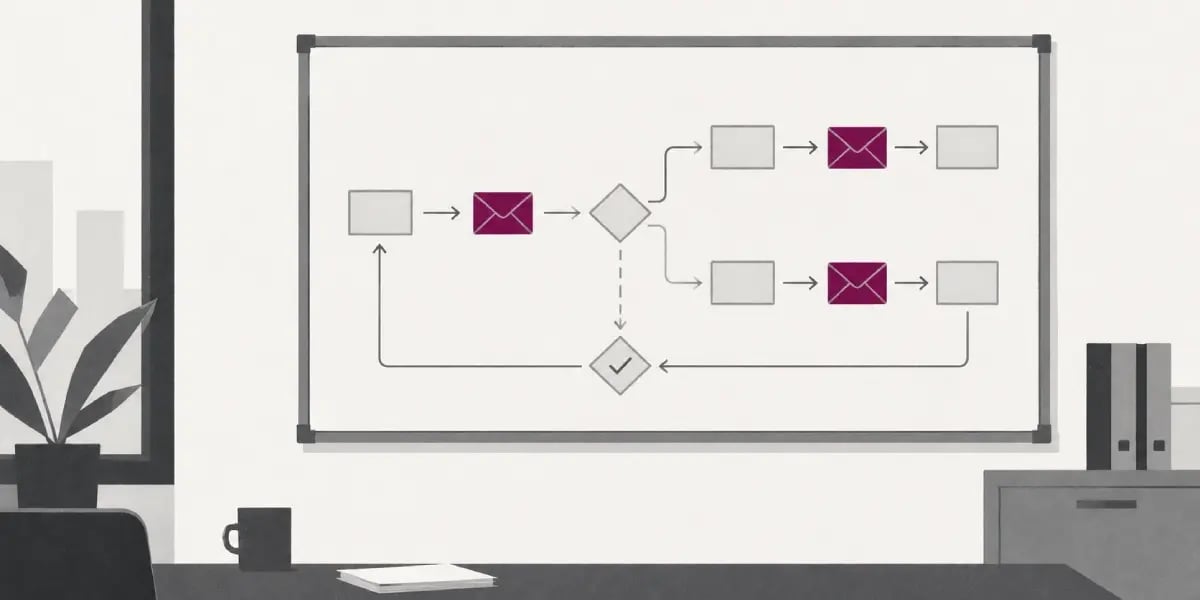
Free tiers are most useful for proving simple, repeatable use cases: welcome and nurture emails, lead capture, basic contact segmentation and campaign reporting. The exact features vary by platform, so test the workflow you actually intend to run.
1. Email sequences
Free tools usually support simple email sequences: welcome series, abandoned cart reminders, onboarding flows, and basic re-engagement campaigns. You dump contacts into a list, specify triggers like “joins list” or “abandons cart,” and then construct a series of timed emails to nurture leads or educate customers.
Drag-and-drop editors and pre-built templates in tools like Mailchimp, HubSpot, and MailerLite help non-designers move quickly. You can begin with a default welcome template, replace it with your branding, then copy it for various segments, such as new newsletter subscribers versus new trial users.
Nearly all free plans include the basic metrics, such as open rate, click‑through/unsubscribe, and many offer conversion tracking through site tracking or ecommerce integrations. These metrics indicate which emails lose attention and where people click, allowing you to tweak subject lines, timing, or calls to action.
This is where boundaries start to become apparent. You can typically segment by simple attributes (location, signup source, tags), but more sophisticated behavior-based segments or dynamic content personalization usually reside behind paywalls. When you compare tools, see how many segments you can create and if you can filter by events such as “clicked a specific link 3 times.
2. Lead capture
Lead capture on free plans tends to revolve around forms, pop-ups, and lightweight landing pages. HubSpot and MailerLite, for example, will allow you to embed forms on your own site or generate standalone pages for things like ebooks, webinars, or waitlists without needing additional design tools.
Integration with CRM systems is hit or miss on free tiers. HubSpot’s own CRM syncs seamlessly, whereas Mailchimp and Brevo depend on native app integrations or middleware such as Zapier. For a sales-driven team, direct CRM sync, including source and campaign data, matters way more than template selection.
Free tools typically support various capture methods, including scroll‑based pop‑ups, exit‑intent, inline embedded forms, and gated content after filling out a form. These tactics help grow your list without custom build.
To polish your inbound strategy, you need to monitor source (campaign or content that produced the lead) as well as fundamental behavior (pages visited, emails opened). Most free plans support basic source tracking via UTM parameters. Advanced behavior tracking across multiple channels will typically require a paid upgrade. If pipeline quality is part of the same challenge, how you can use content marketing for lead generation can help compare lead capture options.
3. Contact management
Contact management in free plans tends to cover core needs: central contact records, tags, lists, and sometimes custom fields. You can tag contacts by lifecycle stage (lead, customer), product interest, or acquisition source to keep future campaigns relevant and targeted.
Basic automation rules update lifecycle stages and list membership triggered by, say, ‘fills form,’ ‘purchases,’ or ‘opens campaign.’ This keeps your database cleaner and reduces manual work. There is almost always a limit on the number of automations or steps in free tiers.
Syncing contact data across channels varies sharply between tools. HubSpot and Zoho line up marketing and CRM data decently on their free plans, whereas standalone email tools may need connectors for bidirectional sync with external CRMs, which can create extra cost or complexity.
Compliance is non-negotiable. Reputable free platforms include GDPR-friendly consent checkboxes, double opt-in options, and audit trails for subscriptions. When evaluating, confirm that you can capture consent type, manage preferences, and easily remove or export data on request.
4. Social media
Some free marketing automation tools involve light social scheduling for Facebook, Instagram, X (Twitter), and LinkedIn. You can queue, preview, and keep a steady baseline presence without logging in to each network individually.
Engagement metrics on free plans are often limited to surface-level counts: likes, comments, shares, and basic reach. That’s typically sufficient to find posts that resonate and subjects to revisit if you can’t view detailed audience segmentations.
Integration between social and other workflows is generally rudimentary. You can fire off an email campaign when someone submits a lead form from a social ad or tag contacts from social campaigns, but sophisticated cross‑channel journeys tend to need paid plans.
Analytics are typically minimal, with simple charts of posting history and top posts by engagement rate. This still helps you discover optimal posting times and formats, such as short educational videos versus long form text updates, for example, without the expense of a dedicated social tool.
5. Basic analytics
Free marketing automation tools almost always offer a core dashboard with campaign performance views: emails sent, delivery rate, opens, clicks, unsubscribes, and sometimes revenue for ecommerce integrations. This perspective is essential for detecting deliverability issues or sudden engagement declines.
You can typically slice stats by campaign, list, timeframe, and occasionally device. For time-strapped teams, these pre-built charts suffice to answer common questions such as ‘Which lead magnet is generating higher-quality subscribers?’ or ‘Which welcome email generates more clicks?’
Report exports and custom reporting is where free plans tend to retract. You could be confined to on-screen reports with CSV downloads or a small date range. If you intend to integrate marketing performance with finance or product data in external tools, verify these limits ahead of time.
Analytics from free tools are still powerful for iteration. You can measure performance before and after you change subject lines, send times, or segmentation rules, and keep what works and ditch what doesn’t.
The hidden costs of free
Free marketing automation tools minimize initial investment, but they tend to push costs into less obvious places — wasted time, absent data, and a forced upgrade that hits just when your marketing begins to succeed. For a closer look at the shift from tasks to strategy, AI is replacing marketing tasks - But not marketing teams adds useful context.
Hidden monetary costs layer on as well. Seat-based pricing can leap again once more teammates join, with per-user charges rapidly transforming a “free” stack into a subscription commitment.
Contact-based pricing can increase quickly as your database grows. Model the paid tier at your expected contact volume rather than assuming the first paid plan will be enough.
More sophisticated or frequent campaigns can also push you into higher plans as you add journeys, channels, users or sending volume.
Integration and support are quiet cost multipliers. Middleware, premium connectors, implementation help and higher support tiers can turn a nominally free stack into a paid operating model.
Functionality caps
Free plans typically limit what you can automate. You’ll receive a single welcome flow, a basic drip, and an abandoned-cart series, but not layered logic or A/B testing at each node or cross-channel orchestration.
Those limitations frequently arise the instant you seek to tie in additional data sources. The free tier might provide you with a single CRM and single e-commerce integration. Anything past the starter set often lurks behind higher tiers with additional monthly integration charges.
- Limited number of automation workflows or journeys
- Caps on monthly email or message sends
- Limited campaign types include no dynamic content and no multi-step A/B tests.
- Basic analytics only; no attribution or funnel breakdowns
- Few native integrations; advanced connectors sold as add‑ons
For growth planning, you want to visualize your funnel 6 to 12 months into the future. If adding a new segment, language, or product line triggers a plan change every quarter, internal costs rise.
Your team spends time reconfiguring journeys instead of refining them. Forecasting becomes harder because your cost base changes whenever you improve performance.
Contact limits
Most free tools limit contacts to a fairly low level, which is great at launch but dangerous once you achieve product-market fit and list growth accelerates.
Once you cross those limits, platforms might pause sends, throttle campaigns, or require an urgent upgrade before scheduled workflows resume. That can crack nurture journeys in the midst of a launch or seasonal promotion.
For list-driven businesses, freebies with generous or practically unlimited contacts at lower tiers are usually safer. You even out your cost per contact, guard deliverability, and don’t have to do stupid ‘clean lists to save a buck’ constantly.
You want someone monitoring contact utilization as a routine measure, not a shock. A basic monthly dashboard—“contacts vs plan limit”—can avoid compelled, last-minute plan changes that land smack in the middle of important campaigns.
Branding requirements
Vendor branding is another common trade-off on free plans. It could be a ‘powered by’ footer on each email or a logo badge on landing pages for paid campaigns.
In certain markets, this appears innocuous. In others, particularly B2B or high-ticket items, overt third-party branding can communicate “low end tooling,” which may conflict with the positioning you desire.
- See if you can hide branding over some volume threshold.
- Check if white-label options are available on upper flat-fee tiers.
- Soften external marks with custom domains and consistent design.
- Reserve non‑branded tools for critical, client‑facing assets.
When you’re tool shopping, consider branding rules in your score card, especially if you handle client campaigns that demand pristine, agency-quality presentation.
Support access
Support access varies significantly across free plans. You might receive a public forum, sluggish email replies, or self‑service articles, but not a named contact or onboarding assistance.
Priority support, implementation calls, and migration assistance nearly always reside in paid tiers. Sometimes, they are bundled with the very same add-ons you require for advanced reporting or integrations.
In practice, this means your team must be ready to self-diagnose issues. Test tracking pixels, validate CRM syncs, and troubleshoot automation logic using documentation and community threads.
Before you trust a free stack for your revenue-critical campaigns, ask it some real questions to test response times and support quality. A broken integration during a launch costs more than your plan’s monthly fee for a plan that grants you faster and more accountable help.
Connecting your marketing ecosystem
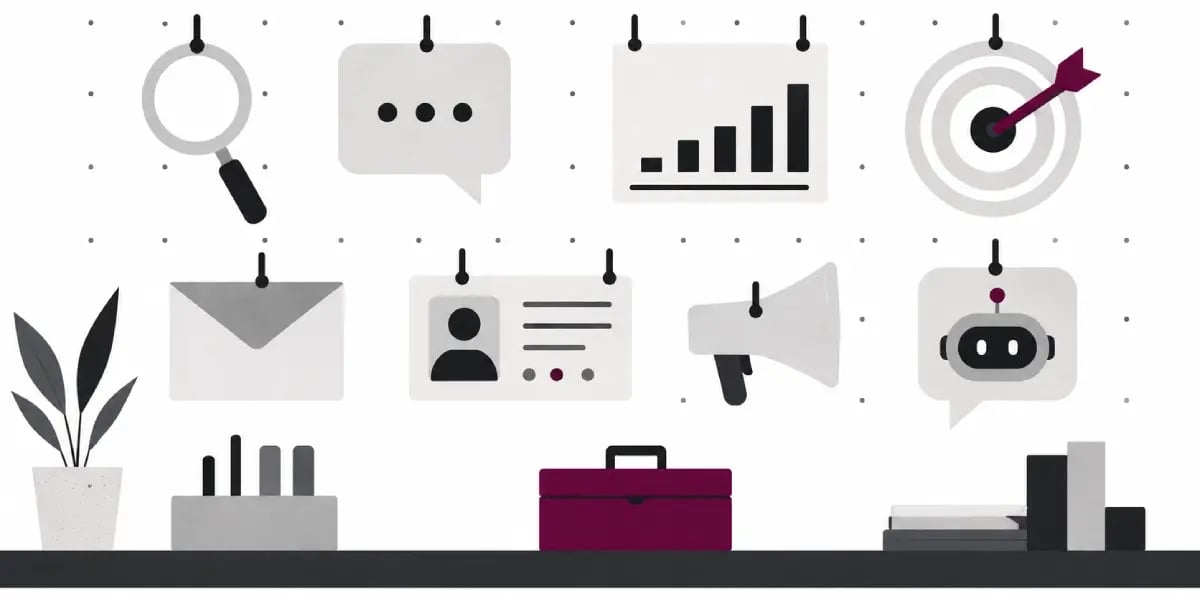
Free marketing automation tools are most valuable when they occupy the center of a connected, data-savvy marketing ecosystem and not as stand-alone apps managing one-off campaigns. Before changing your workflow, why most marketing automation workflows never deliver results can help clarify what to automate next.
Integrate free marketing automation tools with existing CRM, ecommerce, and content management systems.
The starting point is wiring your automation tool into the systems that already hold customer context: CRM, ecommerce, and CMS.
A simple pattern is:
- CRM (for sales and account data)
- Ecommerce platform (for orders, returns, product data)
- CMS or website platform (for content and behavioral data)
- Automation tool on top (for journeys, triggers, and orchestration)
Consider this as constructing a lightweight CDP. You don’t need some enterprise CDP contract to nail the fundamentals. You need clean identifiers, such as email, phone, and customer ID.
You need consistent naming for events, such as “Checkout Started” versus “Begin Checkout,” and a clear owner for each data source. When a free automation tool is tightly integrated to these systems, you can trigger an email when a cart is abandoned, a mobile message when a subscription is about to renew, or a support follow-up after a low satisfaction score without exporting CSV files.
Use apis and native integrations to streamline data flow across your marketing stack.
Native integrations are easier to sustain and frequently more secure for non-technical teams. Check for prebuilt connectors to leading CRMs, ecommerce platforms, and ad networks. This mitigates manual effort and the potential for data drift across tools.
APIs are important if your stack is more complicated. An open, well-documented API allows you to:
- Push events from web or app analytics in real time.
- Sync product catalogs and pricing changes
- Pull reporting data into your BI or data warehouse
If you’re comparing free tools, make sure to see if their “integrations” are actual real-time syncs or just slow daily imports. For time-sensitive journeys, confirm whether the sync frequency is fast enough for the trigger you are designing.
Centralize customer data for a unified view of marketing activities and results.
Your ecosystem connects for one simple, unified customer view, not ten browser tabs. That means a single profile where you can see:
- Contact details and consent
- Acquisition channel and first touch
- Purchase history and lifecycle stage
- Engagement across email, social, mobile, and ads
Recent table stakes are email, social publishing, mobile messaging, and some level of cross-channel ad control from a single location. Free tiers may cap volume or advanced features, but the structural expectation remains one timeline per person.
To make this usable at scale, the platform needs to support big contact databases, multi-region rules (languages, currencies, time zones), and collaboration across marketing, sales, and support. For event-driven journeys, customer records should update quickly enough that the next message reflects the latest relevant action.
Privacy-first is a must. Your unified profile should track consent, channel opt-ins, and data retention rules. This shields you from penalties and communicates respect when you’re still building trust.
Coordinate multichannel marketing campaigns for consistent messaging and improved customer experience.
Once data is unified, coordination becomes a design problem, not a spreadsheet problem. Visualize your funnel as a single journey that crosses email, SMS, social retargeting, and on-site content instead of disparate campaigns.
Free automation tools with a focus on visual journey builders simplify this. You need to know who is getting what, in what sequence, and for which reasons. Triggers such as “added to cart,” “visited pricing page twice,” or “churn risk score above threshold” should all be accessible as entry points.
A connected ecosystem means:
- Fewer overlapping tools to pay for and manage
- Less manual reconciliation between reports
- Faster iteration, because campaigns, data, and reporting live together
This consolidation saves budget and time and reduces the possibility that teams labor from competing metrics.
Protecting your customer data
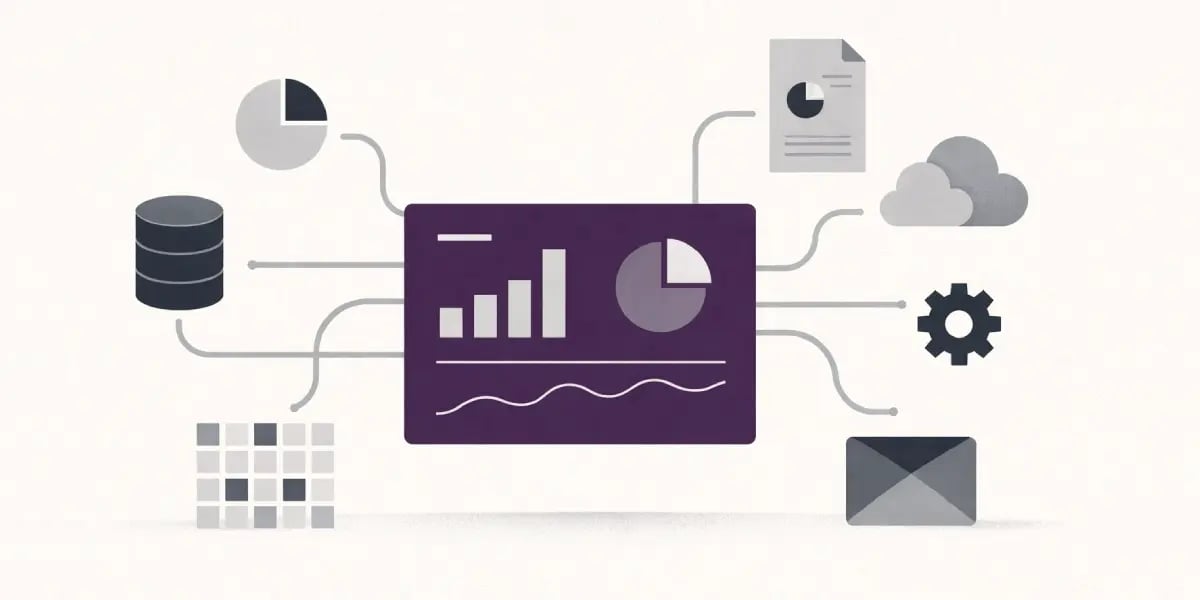
Protecting customer data lies at the heart of any automation strategy, free or paid. If your tool can’t keep data secure, then every smart workflow, beautiful visual report, or integration is a liability, not an asset.
Ensure free marketing automation platforms comply with data protection regulations like GDPR
Compliance is mandatory, even with free tiers. At the very least, look for direct mentions of GDPR, CCPA, and other significant data protection laws in the tool’s documentation and DPA.
Review whether the platform:
- Offers Data Processing Addendums and Standard Contractual Clauses
- Easily supports consent management, such as double opt-in, unsubscribe links, and consent fields.
- Delivers tools to respect the “right to access” and the “right to be forgotten” requests.
Picture your funnel as a series of checkpoints: website forms, email sequences, CRM records, and advertising audiences. A compliant free tool will allow you to track a single contact across these touchpoints and demonstrate when and how consent was obtained.
Platforms with straightforward dashboards and visual consent timelines make this significantly more simple to audit.
Implement secure data storage and encryption to safeguard customer information
Security basics matter: encryption in transit (HTTPS/TLS) and at rest, strong password policies, and multi-factor authentication. Even if you are running a small list, data breaches can result in financial losses, reputational harm, and regulatory fines.
Look for:
- Explicit declarations about where data is stored, such as regions and data centers.
- Encryption standards (for example, AES‑256 at rest)
- Independent security audits or certifications
Free plans that still integrate cleanly with your CRM or e‑commerce platform can sometimes improve protection since you prevent exporting CSV files and emailing them around.
About: Securing your customer data A single, well-designed integration minimizes the potential sources that customer data can leak.
Limit access to sensitive data by setting user permissions within your marketing automation tool
As your team expands, the threat frequently transitions from outsiders to insider error. Role-based access is particularly important on free platforms that seduce you to invite a horde of users.
Set clear permission tiers, such as:
- Admins who configure integrations and data retention
- Marketers who build campaigns but cannot export full databases
- Analysts who see aggregate performance, not raw personal data
Tools that emphasize clarity in their user management, such as flat role dashboards and visual trails of who modified what, help you more easily avoid accidental exposure while still enabling cross-region collaboration and complex segmentation.
Regularly back up customer data to prevent loss during platform changes or outages
Even robust platforms crash from time to time. Outages, failed syncs, or rushed migrations can wipe out months of tracking and segmentation work. Backing up protects businesses and faith.
Create a simple backup routine:
- Export key fields (email, consent status, key attributes) on a routine schedule.
- Store backups in secure, encrypted storage with limited access
- Test restore steps on a small sample before any major platform change.
If your free marketing automation tool integrates deeply with your CRM, use that CRM as the “source of truth” and ensure it has its own backup strategy.
See what kind of support you receive on the free plan. If they don’t offer around-the-clock help, your backup discipline becomes even more paramount when something snaps at peak traffic.
When should you upgrade from free marketing automation?
A free plan has done its job when it proves the workflow is useful. Upgrade when the limitations begin costing more in time, lost data or missed opportunities than the paid plan would cost.
| Stay free when… | Consider paying when… |
|---|---|
| Your database and send volume sit comfortably below the limits. | Limits force list cuts, batching or paused workflows. |
| You only need one or two simple journeys. | You need branching, scoring, personalization or multiple lifecycle journeys. |
| Basic reporting answers your questions. | You need pipeline, revenue, attribution or cross-channel reporting. |
| Your integrations are reliable. | Manual exports or middleware are becoming routine. |
| A small team can manage the account safely. | You need stronger permissions, governance, onboarding or support. |
Before upgrading, compare the paid version of your current platform with alternatives. The easiest upgrade is not always the best long-term stack. Our guides to marketing automation examples and all-in-one marketing tools for small budgets can help define what you actually need.
Which free marketing automation software should you choose?
Choose around the workflow, not the word “free.” HubSpot is a strong starting point when CRM alignment matters. Brevo is compelling when email and automation need room to grow. MailerLite is well suited to lightweight email-led journeys. Mailchimp and Zoho can be sensible choices when your team already works in those ecosystems.
Build one real workflow before committing: capture a lead, store the right source and consent data, trigger the follow-up, sync the contact where it needs to go and measure the result. Then model the paid version so a successful free experiment does not create an expensive migration problem later.
Frequently asked questions
What should I look for when evaluating free marketing automation tools?
Core features, not flashy extras. See email automation, simple workflows, contact caps, and reports. Test out ease of use, support, and integrations. Ensure the free plan fits well with your immediate needs and can scale without pushing an expensive upgrade.
Are free marketing automation tools really free in the long run?
They’re free in price, not in cost. You might pay with feature limitations, email branding, contact caps or export limits. As your list grows, you may need to upgrade or migrate, which adds time and implementation costs.
How do free tools integrate with my existing marketing stack?
Nearly all free tools integrate with popular CRMs, website platforms, and form tools via native integrations or APIs. Free plans might limit integrations, sync frequency, or automation depth. Always test critical workflows before getting on board.
Are free marketing automation tools safe for customer data?
Security and privacy are up to the provider, not the cost. Check out their data protection and encryption, backups, and GDPR compliance. Verify where information is saved and who has access to it. Opt for providers with transparent security documentation.
What hidden limits do free marketing automation plans usually have?
Almost all free plans restrict contacts, emails per month, automation steps and users. Some limit A/B testing, advanced segmentation, or support. Know these caps ahead of time, so you don’t hit a growth wall at a key campaign moment.
When should I move from free marketing automation to a paid plan?
Upgrade when you reach contact or email limits, need advanced automation, or want higher-level support and reporting. If manual workarounds are multiplying or your campaigns are starting to feel constrained, a paid plan can save time, drive better performance, and reduce operational risk.
What is the future of free marketing automation tools?
Free tools are probably remaining as entry points. Vendors employ them to bring in small teams and startups, then upsell advanced features powered by data and AI. Look forward to additional automation, smarter suggestions, closer ecosystem integration, and more cautious feature gating.
9 marketing automation platforms that actually make your life easier
Compare 9 top marketing automation platforms, including HubSpot, Saleforce, and Mailchimp to streamline workflows, nurture leads, and grow revenue.

Mailchimp vs. Klaviyo: which one is better for your business?
The key differences in our Mailchimp vs. Klaviyo comparison to find the perfect email marketing platform for your business.

HubSpot vs MailerLite: Do you really need an all-in-one platform?
Discover the key differences between MailerLite vs HubSpot and find out which platform suits your marketing needs best.