

By David Miguel on Aug 4, 2026
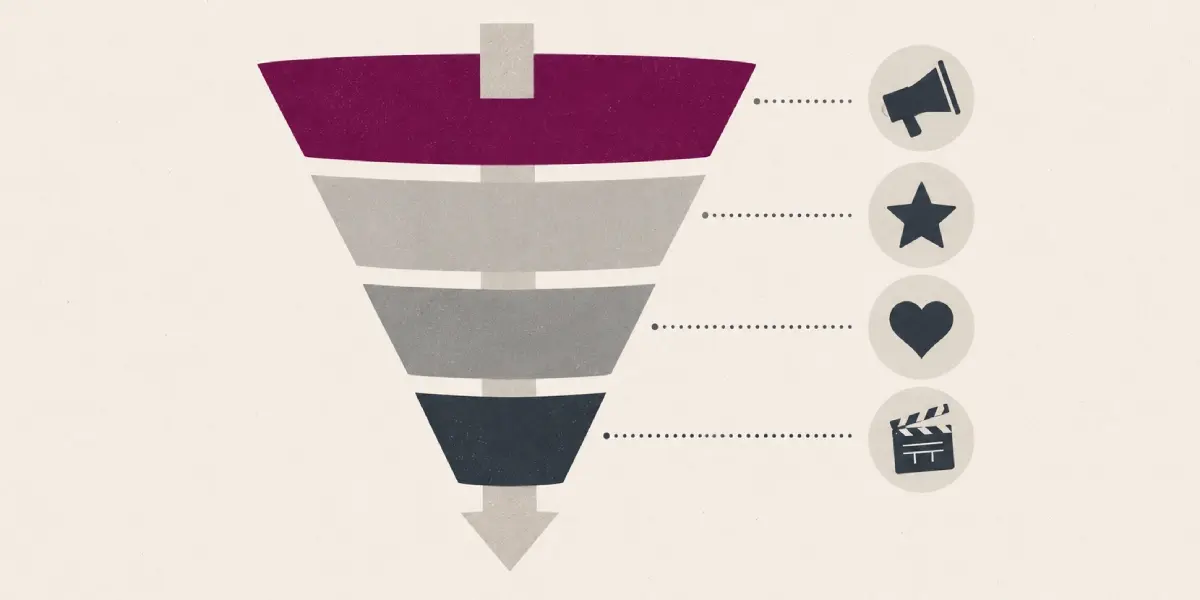
Best all-in-one marketing tools: quick comparison
The best all-in-one marketing tool is the platform that removes the most friction from your current stack without forcing your team into unnecessary cost or complexity.
| Platform | Best for | Core strength | Main trade-off |
|---|---|---|---|
| HubSpot | Growing B2B and service businesses | CRM, marketing, sales and service around one customer record | Costs rise as automation and reporting needs grow |
| HighLevel | Agencies and service providers | CRM, funnels, websites, email, SMS, appointments and client management | Broad feature set requires setup and governance |
| ActiveCampaign | Lifecycle marketing and automation | Flexible email, segmentation, cross-channel automation and CRM | Not a full website, content or service platform |
| Zoho One | Small businesses consolidating wider operations | Marketing, sales, finance, service and operations in one ecosystem | Individual apps can feel less unified |
| Brevo | Budget-conscious multichannel teams | Email, SMS, WhatsApp, transactional messaging, CRM and automation | Lighter CRM and reporting depth |
| Mailchimp | Email-first small businesses | Accessible campaigns, audience tools and lightweight automation | Can become limiting as workflow complexity grows |
| Keap | Appointment-led service businesses | CRM, appointments, quotes, invoicing and sales automation | Less suited to broad content or analytics needs |
Quick recommendation: choose HubSpot for a connected B2B growth platform, HighLevel for an agency model, ActiveCampaign for deeper lifecycle automation, Zoho One for broader software consolidation, and Brevo when budget and multichannel messaging are the main constraints.
All-in-one marketing tools combine several functions—typically CRM, email, forms, landing pages, automation and reporting—inside one platform or tightly connected product ecosystem.
They are most useful when disconnected tools are creating duplicate data, manual handoffs, inconsistent reporting or unnecessary subscription costs. They are less useful when a specialist point solution already solves a critical requirement significantly better.
This guide compares seven practical options for small and growing businesses, then shows how to choose between a unified platform and a more modular stack.
The 7 best all-in-one marketing tools for small businesses
1. HubSpot
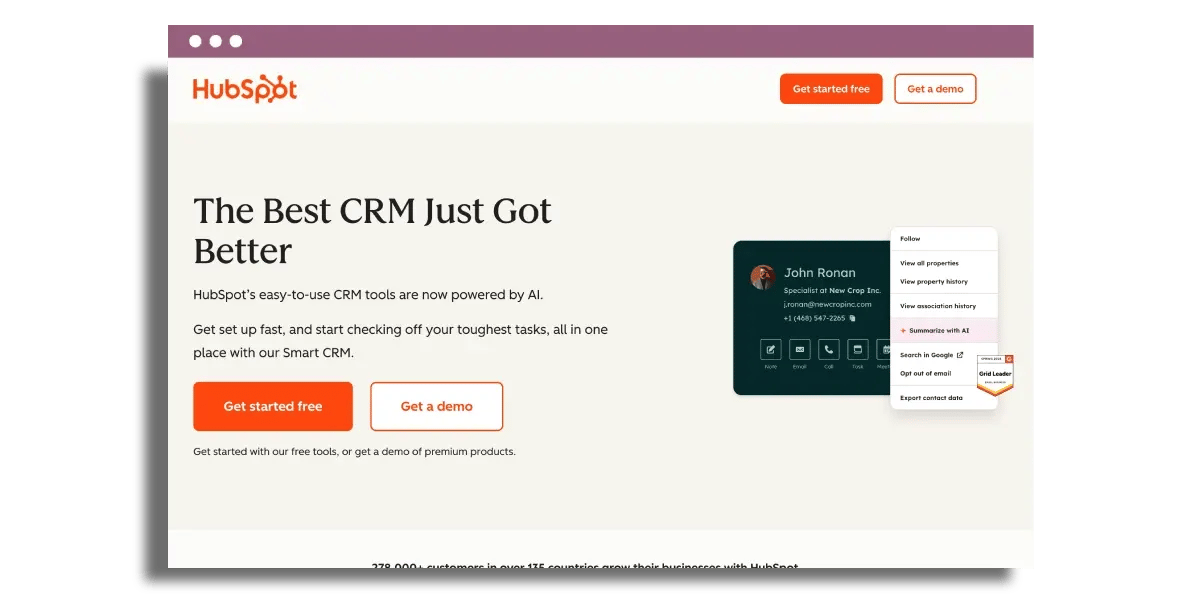
Best for: growing B2B, professional-services and service businesses that want marketing, sales and customer service working from one CRM.
HubSpot brings lead generation, email marketing, automation, CRM, sales activity, customer service and reporting into one customer platform. Its biggest advantage is shared data across marketing and sales.
Choose HubSpot when: sales and marketing alignment, lead management and inbound demand generation are the priority.
Watch for: advanced automation, attribution and operational features sit in higher paid tiers.
2. HighLevel
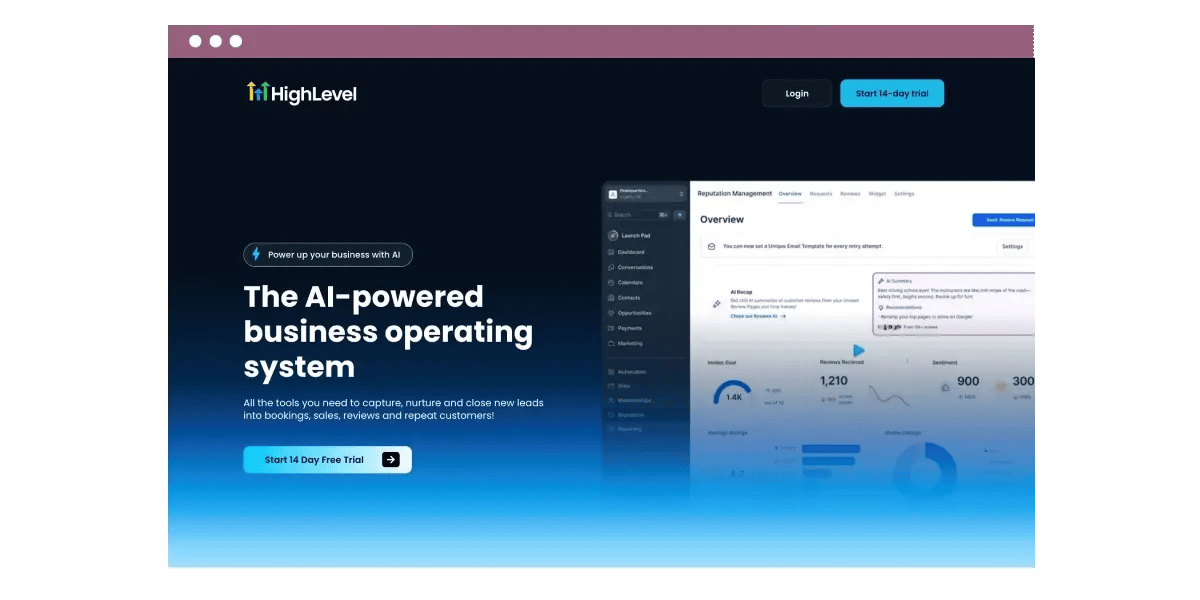
Best for: agencies, consultants and service providers managing lead generation, appointments and client accounts.
HighLevel combines CRM, pipelines, websites, funnels, email, SMS, calendars, payments, reviews and client-management functionality.
Choose HighLevel when: you manage multiple client accounts or appointment-led sales journeys.
Watch for: somebody needs to own templates, permissions, workflows and data quality.
3. ActiveCampaign

Best for: businesses that care more about lifecycle automation and segmentation than having every marketing function inside one product.
ActiveCampaign combines email, SMS, WhatsApp, landing pages, segmentation, automation, reporting and CRM functionality.
Choose ActiveCampaign when: nurture, retention or ecommerce automation are central to growth.
Watch for: you may still need separate content, website, service or deeper sales tools.
4. Zoho One
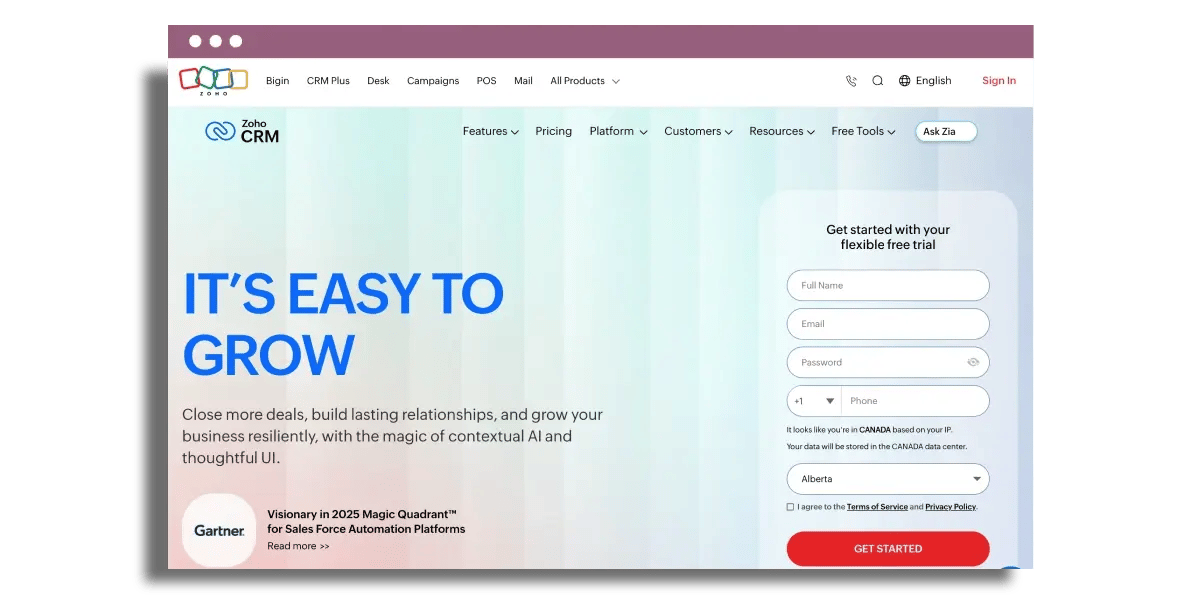
Best for: small and growing businesses wanting to consolidate marketing alongside sales, finance, support and operations.
Zoho One brings together applications for CRM, campaigns, social, support, finance, projects, HR and wider business operations.
Choose Zoho One when: the goal is software consolidation across several departments.
Watch for: test workflows that cross multiple apps, not just each app in isolation.
5. Brevo

Best for: budget-conscious small businesses needing email, transactional messaging and multichannel automation.
Brevo combines email campaigns, automation, SMS, WhatsApp, transactional messaging, landing pages, forms and CRM functionality.
Choose Brevo when: customer communication matters more than advanced revenue operations.
Watch for: verify contact, sending, automation and reporting limits at your expected scale.
6. Mailchimp

Best for: small businesses that remain primarily email-led.
Mailchimp includes email, audience management, forms, landing pages, lightweight automation and ecommerce integrations.
Choose Mailchimp when: newsletters, promotions and simple nurture journeys are the main requirements.
Watch for: deeper CRM and workflow needs can outgrow the platform.
7. Keap
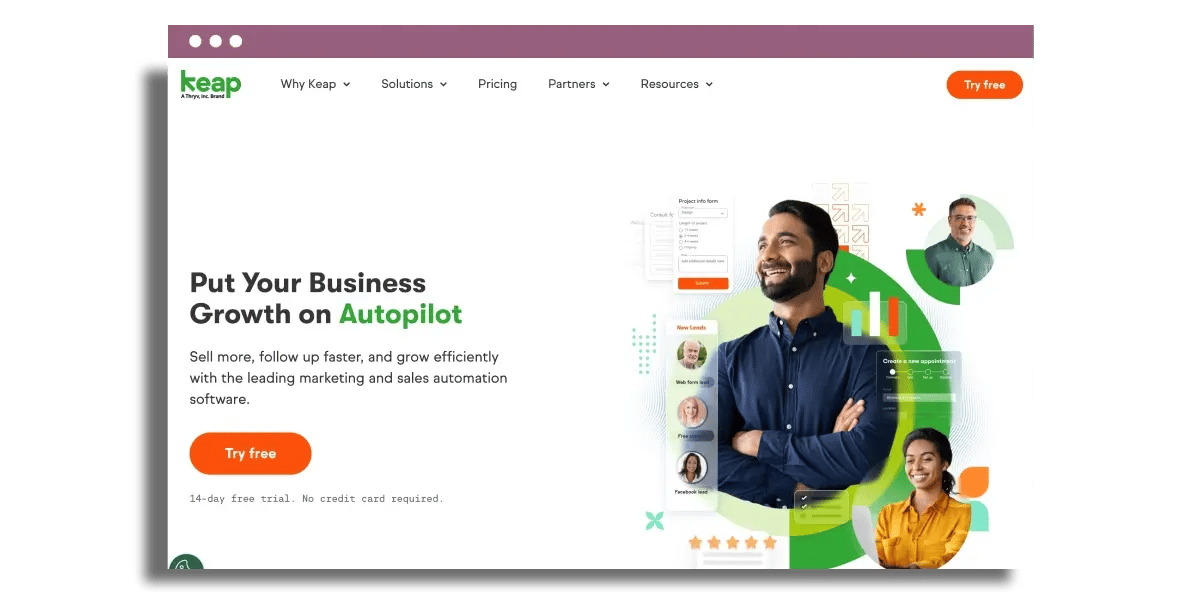
Best for: appointment-led and service-based small businesses that need strong sales follow-up.
Keap combines CRM, lead capture, appointments, automation, quotes, invoicing and payments.
Choose Keap when: consultations, proposals and repeat follow-up define the sales process.
Watch for: it is less suited to broad content, social or advanced analytics needs.
Which all-in-one marketing platform is right for you?
| Your situation | Best starting point | Why |
|---|---|---|
| Growing B2B or professional-services company | HubSpot | CRM, lead management and sales alignment |
| Agency managing several client accounts | HighLevel | Multi-account model with funnels and messaging |
| Email and automation are the strategic priority | ActiveCampaign | Deeper journey logic and segmentation |
| Consolidating software across the whole business | Zoho One | Marketing inside a wider operating suite |
| Small budget with multichannel needs | Brevo | Practical email and messaging functionality |
| Simple email-first marketing program | Mailchimp | Accessible campaigns without a heavy CRM |
| Service business driven by appointments | Keap | CRM, appointments, quotes and invoices |
Why choose unified marketing platforms?
Unified platforms reduce friction by turning a scattered toolset into a single marketing software system: email marketing software, CRM, landing pages, automation features, funnels, analytics, and more run from one place. Rather than a patchwork of subscriptions and logins, teams handle campaigns, data, and reporting from a single digital marketing platform, reducing manual handoffs and duplicate processes. If email is part of the same growth motion, maximize your results with these powerful email marketing automation tools can help you compare the automation layer.
1. Streamlined workflow
All-in-one digital marketing platforms automate repetitive tasks across email campaigns, SMS execution, and social scheduling, allowing your team to focus more on strategizing instead of just 'shuffling stuff.' This powerful automation engine can trigger flows from form fills, purchases, or abandoned carts and seamlessly pushes data updates to your CRM and sales pipelines without any manual effort. If you're deciding where automation should start, 17 manual marketing tasks that should have been automated by now can help prioritize the work.
When sales automation, CRM, and email marketing software are integrated within the same system, handoffs become reliable. A new lead can flow from ad click to landing page, then to form, pipeline stage, and finally to email sequence and sales follow-up without the need for connectors or manual exports. This gives small teams a more consistent process while reducing integration failure points.
Most unified platforms now feature visual automation builders, enabling marketers to drag blocks to create drip campaigns and conditional paths. Non-technical marketers can build and maintain multi-step flows without development support for every change.
2. Centralized data
A unified marketing CRM pulls customer records, sales pipelines, and campaign analytics into a single profile, so every contact displays pages they’ve visited, messages received, deals created, and revenue produced. It cuts down on that old “marketing sees one story, sales sees another” issue.
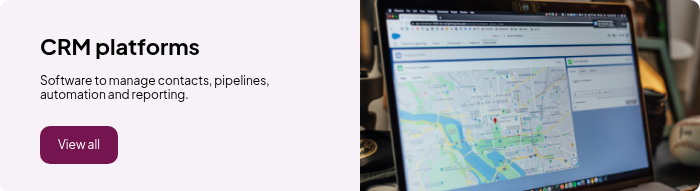
With that complete perspective, segmentation becomes more accurate. You can build audiences based on cross-channel behavior such as webinar attendance, email engagement, SMS replies, or funnel step completion. Personalization gets better because you’re not guessing from incomplete information.
Real-time tracking means new activities stream immediately into that same record. Support, marketing, and sales all view the same timeline instead of having their own piecemeal logs. Data silos shrink because the data no longer lives in a separate email tool, a separate funnel builder, or a separate support platform.
3. Cost savings
Consolidating overlapping tools can reduce subscription costs, integration work and vendor-management overhead. The saving depends on what the platform genuinely replaces.
Compare total ownership cost rather than headline pricing. Include contacts, users, sends, implementation, onboarding, integrations and support.
A few of these unified systems have built in additional modules for affiliate management, invoicing, and basic ecommerce connectors, so you don’t need separate plugins. You cut “hidden” costs by having fewer vendor evaluations, fewer procurement cycles, and less time chasing support across five different providers.
4. Consistent branding
Having one platform for email, SMS, web push and video campaigns normalizes templates, fonts, and layouts. Design teams define components once, and marketing reuses them across newsletters, landing pages, and transactional email without re-creating assets in every tool.
Because branding guidelines live inside the same environment, every touchpoint can pull from shared colors, logos, and tone. This helps keep campaigns across regions or product lines from wandering off-brand and accelerates approval cycles.
Content creation becomes easier as social posts, email broadcasts, and funnel pages are empowered by a single asset library and editor. Marketing teams can publish multi-channel campaigns in one pass and trust that the customer journey from ad to onboarding email delivers a cohesive narrative.
5. Better decisions
Unified analytics from a digital marketing platform consolidates results from all channels into one dashboard. This allows you to observe acquisition, engagement, and revenue in a single view, eliminating the need for cumbersome reports from exported CSV files. Most platforms are streamlining the process, significantly reducing the steps required to format data effectively.
Integrated dashboards facilitate the comparison of marketing strategies, such as email nurture, SMS follow-ups, and retargeting funnels, highlighting their respective pros and cons. By running everything on one system, attribution becomes more reliable and less reliant on fragile tag configurations. A strong integration ecosystem lets the platform remain central without forcing every specialist capability into the same product.
This balance of a central system with flexible integrations is essential for meeting diverse marketing needs and ensuring effective customer engagement across various channels.
What are essential features?

All-in-one marketing tools earn their keep when they remove friction around lead capture, communication, sales, and reporting. A powerful digital marketing platform integrates cleanly with the rest of your stack, blending lead capture, email marketing, and sales funnels with CRM and automation capabilities. This comprehensive marketing solution ensures accessibility for non-technical teams while remaining reliable at scale. Before changing your workflow, why most marketing automation workflows never deliver results can help clarify what to automate next.
Lead capture
Lead capture works best when it feeds directly into the CRM with no manual steps. The platform should offer customizable forms, landing pages, and pop-ups that respect brand guidelines and handle different use cases, including newsletter opt-ins, gated content, webinar registrations, and product waitlists. If pipeline quality is part of the same challenge, how you can use content marketing for lead generation can help compare lead capture options.
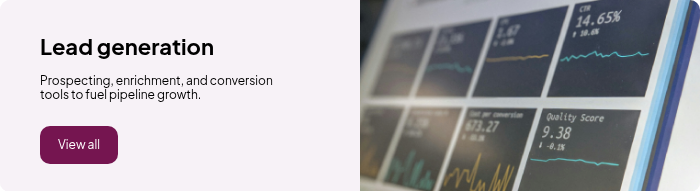
These assets should have native support for consent fields, double opt-in, and rudimentary SEO controls since many teams manage blog content and search landing pages via the same tool.
To implement forms and pages that feed leads straight into the CRM:
- Specify required fields, consent language, and primary tag or custom field.
- Construct a form or landing page with drag-and-drop elements and brand styles.
- Map each form field to CRM fields such as source, campaign, and owner.
- Attach an automation recipe that validates data and adds segmentation tags.
- Define success states such as thank-you pages, email confirmations or SMS confirmations.
- Test across devices, execute test submissions, and check the CRM and automation logs.
Great platforms combine this with automation recipes that trigger right after submission, such as welcome emails, SMS confirmations, or task creation for sales. From there, segmentation rules can group contacts by source, content downloaded, or expressed interest, so later campaigns and offers can be much more focused with no additional effort.
Email marketing
Email is still the workhorse channel in just about all-in-one tools, so the editor, templates, and automation depth are important. A good platform offers drag and drop builders, reusable blocks, and pre-built templates for newsletters, product launches, and transactional messages such as order confirmations and password resets, with mobile responsiveness taken care of out of the box.
Small teams may only need straightforward campaigns and basic analytics, while more mature programs may require deeper segmentation, dynamic content, permissions and testing.
Scheduling and automation need to support both straightforward and advanced use cases. These include recurring newsletters, multi-step drip sequences, and conditional flows where behavior, such as opens, clicks, page views, and purchases, determines the next step.
Robust deliverability monitoring, including bounce tracking, spam complaint reporting, and domain authentication checks, is a vital need if you desire reliable value in the long term, because bad deliverability silently erodes ROI. Ideally, all of this ties back to the central CRM, so contact records show every message, engagement, and conversion in one place.
Sales funnels
For most teams, the sales funnel builder is where “all-in-one” either pays off or adds complexity. A robust platform lets you build end-to-end funnels with opt-in pages, sales pages, upsells, and order bumps while linking each step to an automated sales pipeline.
So, if you’re using the visual builder, you’d see the funnel as stages: awareness leads to interest, interest leads to decision, and decision leads to purchase. The CRM would see this as pipeline stages with tasks and reminders.
Tracking has to follow customer actions across email, landing pages, ecommerce, and even events, then surface that as funnel metrics: opt-in rates, page drop-offs, average order value, and time to conversion.
With that perspective, you can identify bottlenecks, tune messaging, A/B test steps, and know where your automation rules, like triggered emails or SMS nudges, have the highest impact. For ecommerce businesses, test how product, order and revenue data sync with platforms such as Shopify, WooCommerce or BigCommerce.
Customer management
Customer management is the spine that keeps your campaigns, funnels, and support in line. A unified CRM should centralize contact profiles, communication history, tags, deals, support tickets, and subscription data, with pricing and limits that remain workable as the database grows.
That single record then feeds everything else: segmentation, personalization, and reporting. With behavior-based automation, you can map customer journeys as state changes instead of static lists.
For example, the first visit leads to a lead, which then becomes a qualified lead, followed by a customer, then a repeat customer, and finally an advocate. Actions such as email clicks, page views, webinar attendance, purchases, or support interactions can trigger specific follow-ups, including onboarding sequences, renewal reminders, review requests, or loyalty offers.
Service hubs, live chat, and shared inboxes provide support teams with the same context marketing and sales experience, decreasing redundant inquiries and accelerating resolution. Others, meanwhile, bake in loyalty programs, simple affiliate management or community spaces.
When they sit on the same data model as your CRM and marketing automation, retention efforts become far easier to run and measure.
Analytics
Analytics is where an all-in-one tool either shines or fizzles. Robust platforms provide real-time dashboards integrating campaign metrics, sales and engagement data from email, SMS, social, content and ecommerce into a single view.
This centralized reporting saves time and cost compared to stitching together a bunch of tools, and it supports smarter strategic decisions. Custom reporting is particularly useful as teams scale.
You should be able to slice by segment, funnel, lifecycle stage, or channel, and measure not just clicks and opens but revenue, lifetime value, and retention by segment. For some companies, this extends to content and SEO analytics, including blog performance, search rankings, and organic lead contribution, so that content strategy lives in the same reporting layer as paid and outbound.
Top-tier configurations will leverage analytics results to optimize segmentation parameters, tweak automation flow, and shift spending toward channels with higher returns.
AI-assisted insights can be useful, but the platform should still expose enough underlying data and logic for teams to trust the recommendations.
How to choose an all-in-one marketing platform

Selection begins with clarity. Your tool should minimize friction, play nice with your stack, and provide obvious value not just in the first quarter after adoption but for several years.
Write down your business needs, marketing goals, and what features you need before you look at platforms. Keep it simple and specific:
- Business needs: lead capture, nurture, e-commerce, self-serve demos, partner marketing
- Marketing goals might include increasing qualified leads, reducing manual administration, improving attribution accuracy or shortening campaign launch time.
- Required features include email automation, CRM or CRM sync, forms, landing pages, reporting, role-based access, API access, and native integrations with your core tools, such as Shopify, HubSpot CRM, Salesforce, and Stripe.
- Optional but valuable: A/B testing, customer journeys, SMS, in-app messaging, lead scoring, webhook support, custom events, multilingual support.
Translate this into a short requirements table for your team:
That keeps you from being dazzled by shiny buzzword-laden features that don’t optimize results.
Next, compare platforms side by side. Focus on how they handle everyday workflows:
*Use as relative comparison, not exact figures.
Forget headline price. See how cost shifts as you expand contacts from 10,000 to 100,000, add more workspaces, or require additional automation paths.
Watch for fees on:
- Required add-ons (advanced reporting, transactional email, dedicated IP)
- Overages on email sends, contacts, or events
- Mandatory onboarding or support tiers
Evaluate ease of use and adoption risk. A clean modern interface with sane workflows will shorten training time and decrease resistance. If the UI feels dated or clunky in a trial, it will bog down campaign execution later.
Use free trials or free plans to run at least one real campaign and one automation journey before you decide.
Integration and automation should be tested against your real stack. Map the CRM, analytics, ecommerce, payments and data systems the platform must connect with. Our guides to marketing automation examples and sales funnel software can help define the workflows before you evaluate vendors.
See if API limits, webhook support, and if it can handle event-based triggers, such as “user completes onboarding” leading to ‘start nurture sequence.’
Prioritize platforms that offer:
- Scalable plans, not punitive jumps when you grow
- Clear automation builders that non-engineers can maintain
- Reliable, responsive support with documentation, tutorials, and human assistance
The hidden cost of fragmentation

Fragmentation appears innocuous initially. A landing page tool here, an email marketing platform there, a couple of analytics dashboards, and a separate CRM create a disjointed digital marketing experience. Each decision seems rational on its own, but this is where the trouble lurks when these tools collide in day-to-day work, costing dollars, hours, and opportunities lost.
Recognize increased expenses from managing multiple tools
Stacks with 12–15 disconnected tools are not unusual. You have different platforms for data collection, BI reporting, attribution, analytics, CDPs and so on. On paper, each subscription could seem cheap.
In reality, the bundled software line frequently ends up in the neighborhood of $200,000 to $850,000 per year. It doesn’t end at license fees, either. Teams using more than 15 marketing tools spend around 40% of their time on tool management: logging in and out, exporting CSV files, importing lists, and reconciling conflicting numbers.
That time is payroll, not abstract “overhead.” When you total it across marketers, analysts, and ops roles, the spend on fragmented software plus the effort to keep it all running often surpasses what a more integrated, all-in-one environment designed to reduce friction would cost.
Identify inefficiencies from fragmented experience and data
When customer data lives in 12–15 different places, you don’t just get slower reporting. You get fractured trips. Someone could click an ad tracked somewhere, register through a form elsewhere, and make a purchase through an e-commerce system that never feeds its events back to the CRM.
Every system presents a slightly different version of reality. This fragmentation is more than an analytics problem. It adds actual compliance risk, particularly under GDPR and CCPA, since you can’t confidently answer simple questions such as “Where is this customer data stored?” or “Did we delete everything after a deletion request?
If you scatter customer records across multiple platforms, each additional tool expands your attack surface and the likelihood that it drifts out of accordance with your privacy policy.
Calculate lost productivity from manual work and duplication
A big chunk of hidden cost lurks in low-value manual labor, particularly in the realm of digital marketing. Research indicates that fifty percent of data analyst time is squandered on data wrangling alone, which can result in around $75,000 a year in wasted productivity for a single senior analyst. This time could be better spent utilizing a powerful marketing automation platform to streamline processes and enhance efficiency. Before changing your workflow, free marketing automation software: what’s worth using in 2026 can help clarify what to automate next.
That’s time spent cleaning exports, fixing mismatched IDs, and rebuilding reports because two tools define “conversion” differently. It’s the same for marketers and content teams using an email marketing platform. Around 30% of a full-time employee’s capacity often disappears into moving information between systems that should already be integrated, hindering effective customer engagement.
This includes copying UTM tags, updating segments across tools, re-uploading assets, or manually stitching together campaign performance. Writers and planners devote significant portions of their days jumping between silos rather than authoring, coding, or tuning. Essentially, you employ smart folks for high-leverage tasks and then request that they function as human APIs.
Understand branding risks and missed opportunities in silos
Siloed platforms sneakily weaken brand consistency. Email templates live in one tool, ad creatives in another, and in-product messages in a third. Without a common source of truth, tone, imagery, and offers all float over time.
A customer could be exposed to three distinct versions of your value proposition in-channel in the same week. It’s this same fragmentation that blocks more advanced opportunities. If your attribution, CDP, and automation tools don’t agree on who your best customers are, you can’t reliably trigger targeted upsells, win-back flows, or personalized journeys.
Some 47% of decision-makers today identify data and system integration complexity as a leading reason that they can’t fully leverage marketing technology they already pay for. That’s not a tooling shortage. That’s a coordination problem.
Overcoming adoption challenges

Adopting an all-in-one marketing software tool is never just a technology issue; it’s an operational change project that affects habits, incentives, and data discipline. The goal is simple: reduce friction, integrate well with what you already use, and leverage powerful automation features to deliver predictable long-term value without burning out a busy team.
Provide clear onboarding instructions and training resources for busy marketers and small teams
Start from the real pain points: messy contacts, missed follow-ups, unclear pipelines, and manual reporting. Connect these problems to little workflows in your new platform, so onboarding is “problem → feature,” not “feature tour.
For a small or overloaded team, design onboarding like this:
- 1–2 page quick-start guide: where to log in, how to add a contact, how to send a campaign, how to see basic reports.
- Role-based mini paths: for example, “campaign builder in 30 minutes” for marketers, “lead follow-up in 20 minutes” for sales.
- Short recorded videos (3–5 minutes each): one per core task, not per feature menu.
Use a phased rollout: introduce only the essentials first, such as contacts, email sends, and simple automations. Then add landing pages, social scheduling, or advanced scoring in later stages. This maintains cognitive load low as the system becomes part of daily work.
Address resistance to change by highlighting the benefits of streamlined tools and automation
They fight change when they’re afraid of additional efforts or that they’re losing control. Connect the new tool to their daily frustrations: switching between four to five apps, exporting .csv files, guessing which leads are warm.
Show concrete before → after comparisons:
- Before: Manual follow-ups in spreadsheets. After: Automated sequences triggered when someone fills out a form.
- Before: Conflicting contact records. After: One profile with integrated email, ad, and website activity.
Emphasize that automation is present to eliminate repetitive tasks, not decision making. For instance, “the system sends the reminder email and you make the response to replies.” This framing minimizes the fear and makes the value of streamlining more obvious.
Regular Q&A sessions, weekly at first and then monthly, help surface concerns early. Keep formats simple: 30 to 45 minutes, live questions, and short demos tied to real campaigns. Small wins from these sessions create momentum and trust.
Set up pilot projects to demonstrate quick wins and build confidence in the new platform
Run a pilot with a small, motivated group using low-risk workflows. For instance, a single nurture sequence for webinar leads or a reactivation email to a tiny segment. Define clear success metrics up front: open rates, replies, follow-up completion, and time saved.
Pilot structure can look like:
- Scope: 1–2 core use cases mapped to real problems.
- Participants: 3–7 users from marketing and sales.
- Duration: 2–4 weeks.
Use the pilot to test data hygiene rules: required fields on key objects (lead source, segment, lifecycle stage), validation rules to prevent junk data, and simple dashboards that reveal gaps. Set up a weekly 30-minute review for you to review results, gather feedback, and adjust processes.
Once the pilot demonstrates quick wins, distribute those numbers more widely within the team. For example, "missed follow-ups dropped 40 percent" or "time to send a campaign went from 2 days to 2 hours." This creates a performance-based, rather than abstract promise-based, argument for wider adoption.
Offer ongoing support and resources to ensure successful platform adoption and usage
Long term value comes from consistent usage, data quality, and frictionless integration into your stack. Design support as a process, not a training.
Key elements:
- Data discipline: Set required fields and validation rules, schedule monthly cleanups, and explain why accurate data matters for reporting, routing, and personalization.
- Integrations: Connect the platform to your CRM, e‑commerce, or billing tools with a clear input, process, and output map. For instance, “form fill in website leads to new contact in marketing tool and syncs to CRM with lead source and campaign ID.”
- Governance defines who owns workflows, who approves changes, and how new automations are tested before going live.
Match all of this up with budget, team bandwidth, and growth planning. A tool that integrates well, scales without constant rework, and supports data-driven decisions will pay off more than a cheaper but fragmented option.
Back that reality with office hours, refreshed documentation, and easy internal cheat sheets so new hires can get productive without reinventing the wheel.
Which all-in-one marketing tool should you choose?
- Choose HubSpot for CRM, inbound marketing, sales and service alignment.
- Choose HighLevel for an agency or multi-client model.
- Choose ActiveCampaign for sophisticated lifecycle automation.
- Choose Zoho One for wider software consolidation.
- Choose Brevo for budget-conscious multichannel communication.
- Choose Mailchimp for a simple email-first program.
- Choose Keap for appointment-led sales and follow-up.
Run one real workflow before committing: capture a lead, store the right source and consent data, trigger the follow-up, route it to the correct owner and report on the result. The best platform is not the one that promises to replace everything. It is the one that makes the work that matters simpler and more reliable.
Frequently asked questions
What is an all-in-one marketing platform?
An all-in-one marketing platform combines several functions—often CRM, email, forms, landing pages, automation and analytics—inside one product or connected suite.
What is the best all-in-one marketing tool for a small business?
The best option depends on the business model. HubSpot is strong for growing B2B and service businesses, HighLevel for agencies, ActiveCampaign for lifecycle automation, Zoho One for wider business-software consolidation, Brevo for budget-conscious multichannel messaging, Mailchimp for email-first teams and Keap for appointment-led service businesses.
Is HubSpot an all-in-one marketing platform?
Yes. HubSpot combines CRM, marketing, sales, service, content and reporting products around a shared customer-data platform. The exact capabilities depend on the products and subscription tiers selected.
Are all-in-one marketing tools cheaper than separate tools?
They can be, particularly when they replace overlapping subscriptions and reduce integration or reporting work. Compare total cost across contacts, users, sends, onboarding, support, integrations and specialist software you will still need.
What features should I look for in an all-in-one marketing tool?
Common requirements include CRM or contact management, forms, landing pages, email, automation, segmentation, analytics and integrations. You may also need sales pipelines, SMS, appointments, ecommerce data, payments, customer service, permissions or custom reporting.
When should I use specialist marketing tools instead?
Use specialist tools when a capability is strategically important and the all-in-one platform cannot provide the required depth, flexibility or performance.
How do I choose an all-in-one marketing platform?
Define the workflows and outcomes you need first. Create a weighted list of requirements, shortlist a few platforms, then test each one using the same real campaign or customer journey.
CRM vs marketing automation - what’s the difference? (and which do you need?)
CRM vs marketing automation: what’s the difference, and which one does your business actually need? Learn how they compare and when to use each.

AEO vs SEO vs GEO: What to Prioritize in 2026
SEO, AEO or GEO? Learn how they differ, where they overlap and what to prioritize in your 2026 search strategy as AI reshapes discovery.

HubSpot vs MailerLite: Do you really need an all-in-one platform?
Discover the key differences between MailerLite vs HubSpot and find out which platform suits your marketing needs best.