

By David Miguel on Jan 22, 2026

Quick links
Best AI writing assistants in 2026: quick picks
AI writing assistants now cover very different jobs, from grammar and rewriting to marketing production, SEO content and fiction. The best choice depends less on which tool has the longest feature list and more on where you need help in your writing workflow.
For most people, the smartest approach is not to collect eight subscriptions. Start with the point of friction you encounter most often, choose the tool built around that job, and only add another when it solves a genuinely different problem.
AI writing assistants have moved well beyond basic text generation. Some work best as editors sitting alongside you while you write. Others are designed to turn briefs into marketing assets, optimize content workflows, summarize research, or help fiction writers develop ideas and scenes.
That makes choosing one less about finding the most powerful AI model and more about matching the tool to the job. Below, we compare eight established writing assistants by what they do best, where they fall short, and the workflows they make most sense for.
1. Grammarly
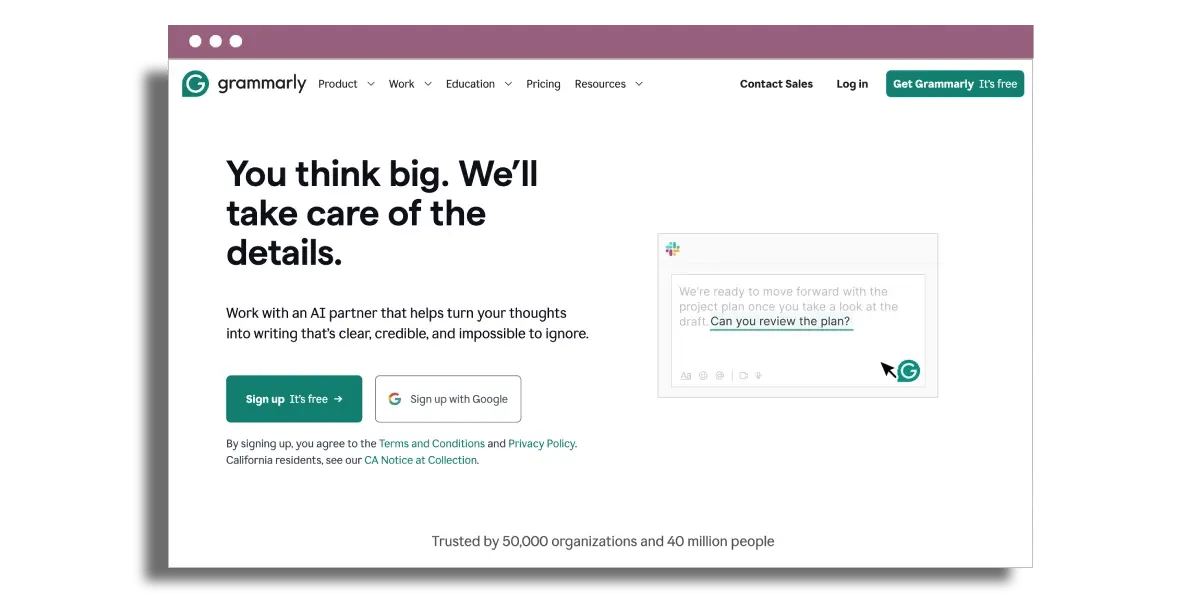
A writing assistant for real-time grammar, clarity, and tone improvements across email, docs, and web content.
Best for
- Writers who want cleaner, clearer writing with minimal effort
- Teams needing consistent tone and baseline quality across lots of drafts
What it does
- Grammar, punctuation, and spelling fixes as you type
- Clarity rewrites to reduce wordiness and improve flow
- Tone suggestions to match context (e.g., confident vs. friendly)
- Plagiarism checking (plan dependent) and writing insights
Strengths
- Fast ‘last-pass’ quality layer across many apps
- Good at tightening sentences and spotting repetitive phrasing
- Works well for business writing and content publishing workflows
Limitations
- Can nudge writing toward a safer, more generic style if overused
- High-stakes facts and claims still need manual verification
Pricing snapshot
- Free plan: Yes (core grammar/spelling)
- Paid plans: Add advanced rewrites, tone controls, plagiarism (varies by tier)
Use case: Best when you want consistent polish on everything you write—especially emails, briefs, and articles—without breaking your writing flow.
Grammarly provides an AI content generation tool for cleaner, clearer writing across nearly every format you work in. For grammar, punctuation, and style checks, Grammarly spans most use cases. You can apply this powerful tool to blog posts, email campaigns, sales outreach, internal documentation, and academic drafts.
Its AI capabilities flag issues such as subject-verb agreement, missing articles, comma problems, and awkward phrasing in real time. For instance, a sentence such as ‘The report have many data which is confusing’ becomes ‘The report has a lot of data, which can be confusing.’ The tool catches wordy or repetitive phrases and recommends snappier alternatives. For long-form content, that regular clean-up helps keep your writing consistent from section to section.
Real-time feedback on clarity, tone, and engagement helps you tweak for different audiences. Grammarly will highlight vague sentences and suggest easier-to-follow alternatives. You get tone tags like “formal,” “confident,” or “friendly,” which is great if you write in English as a second language.
Nuances like “Could you review when you have a moment?” versus “Review this now” become more evident. That kind of tone analysis provides you a better shot at hitting the right emotional spectrum for clients, bosses, or academic reviewers.
For professional and SEO work, plagiarism and vocabulary suggestions add an additional layer. Grammarly’s plagiarism checker checks your text against billions of web pages and academic sources. If you reuse research or summarize articles, it warns you if your text sits too close to existing content, enhancing your SEO content strategy.
Meanwhile, vocabulary suggestions assist you in switching vocabulary without sounding keyword-stuffed. For instance, you can exchange ‘very important’ for ‘crucial’ or ‘essential’ in certain locations. AI detection should be treated cautiously. Detector results can produce false positives and false negatives, so they should not be used as definitive proof of how a piece of writing was produced.
In everyday workflows, integrations count. Grammarly functions in all major browsers, Google Docs, Microsoft Word, and widely used emails. Several teams have it running in the background so that every draft, from a Slack-style quick message to a 3,000-word report, receives the same baseline quality scrutiny.
Its broad adoption and integration across common writing environments are a major part of Grammarly's appeal, particularly for teams that want one editing layer across multiple channels.
There are trade-offs. If you accept every recommendation, Grammarly can push writing toward a safer, more standardized style that flattens personality. The free version already covers many fundamental grammar and spelling needs.
A significant number of users don’t even bother upgrading. Others try out the paid plan and don’t find enough additional value in advanced suggestions to make the price worth it.
2. Jasper
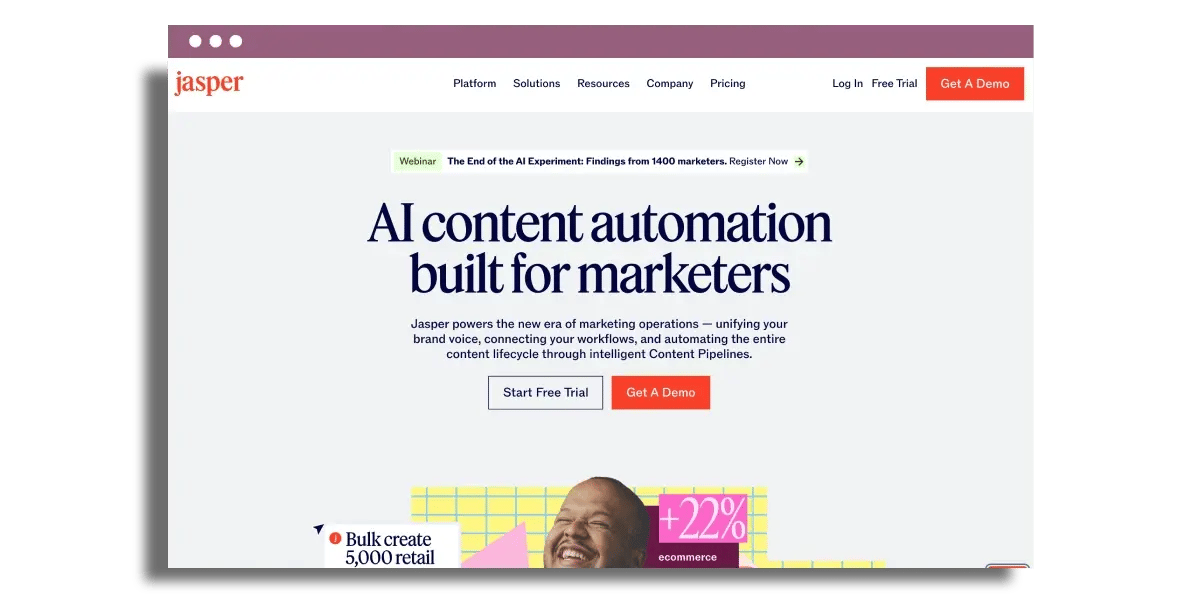
A marketing-focused AI writer built for drafting and scaling campaigns, blogs, ads, and landing page copy with brand voice control.
Best for
- Marketing teams producing high volumes of content
- Writers who want templates + long-form drafting in one workspace
What it does
- Generate blog outlines and first drafts from a brief
- Create ad copy, emails, landing sections, and social captions
- Use templates and reusable prompts to standardise outputs
- Support SEO-oriented structuring when you provide keyword + intent inputs
Strengths
- Strong for speed when you provide clear structure and context
- Useful templates that reduce blank-page time
- Brand voice features help keep outputs consistent across writers
Limitations
- Outputs can feel generic without detailed inputs and editing
- Any stats/claims need fact-checking; don’t trust it as a source
Pricing snapshot
- Free plan: Typically no (trial common)
- Paid plans: Tiered, with usage limits/credits depending on plan
Use case: Best when you want repeatable marketing copy workflows—turning one brief into multiple assets (blog, ads, email) with consistent voice.
Then, there’s Jasper for long-form and marketing-focused content that still sounds like you. Jasper is a generative AI writing assistant for blogs, ads, landing pages, and social posts. You select tone and style, then steer it with explicit context.
For instance, you could set ‘confident, friendly, B2B SaaS marketer’ as the voice, paste in a short brief, and request a 1,500-word blog outline and intro. The long-form editor then allows you to go section by section, polish headlines, and fine-tune tone without having to start over each time. It is less effective when you expect it to infer the audience, objective and angle from a vague prompt.
Jasper fares better when you spell out audience, goal, angle, and structure. Templates and prompts assist you in expediting the processes of idea generation and content planning. You receive pre-constructed scaffolding for blog post outlines, product descriptions, AIDA marketing copy, social captions, and email sequences.
For instance, you can feed a single core concept such as “AI for retail analytics” through multiple templates and get a LinkedIn post, a landing page hero, and a nurture email in minutes. The practical limitation is that higher-volume generation can increase the cost of the workflow depending on your plan. Clear, specific briefs also tend to produce cleaner outputs and reduce unnecessary regeneration.
SEO features are located within modes such as SEO Mode and Power Mode in the long-form editor. Jasper lets you insert target keywords, view suggestions, and mold headings and content format around search intent. A typical workflow might be to add a primary keyword, ask for 10 title ideas, then have Jasper build an outline that covers related subtopics.
You still need an SEO strategy and some judgment, as Jasper can generate keyword-stuffed or generic sections if you depend solely on its recommendations. It can hallucinate or confidently pull info out of thin air, so any statistics, assertions, or specialized information require manual verification with reliable sources.
Collaboration features get teams working inside Jasper instead of emailing around disconnected drafts. A team of content writers can collaborate on shared documents and comments and make their way through drafting, editing, and publishing stages. That backs content marketers and copy squads that care about consistent voice and faster review cycles.
You still require editors. Jasper helps with writing, editing, and idea generation, not complete replacement of human writers or subject-matter experts.
3. Copy.ai
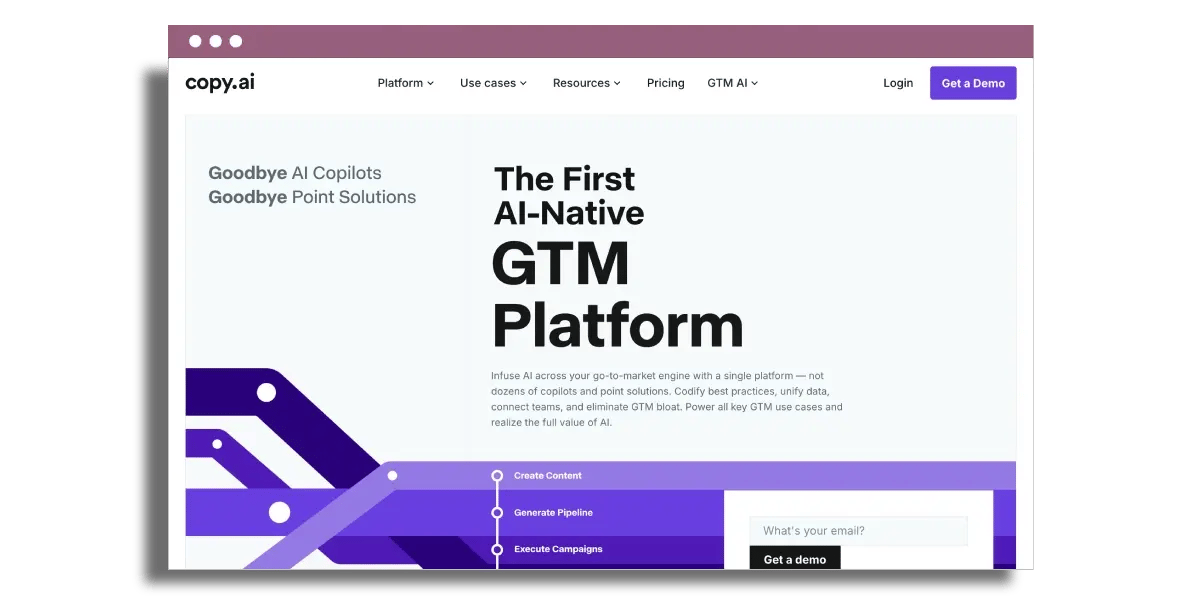
A fast AI copy generator for producing and iterating marketing copy, product messaging, and variations in different tones.
Best for
- Marketers needing quick copy variations for testing
- Teams writing lots of short-form assets (ads, social, product copy)
What it does
- Generate multiple headline and hook options from a short prompt
- Rewrite paragraphs for clarity and brevity
- Create product descriptions and landing page sections
- Build repeatable templates for campaigns and messaging blocks
Strengths
- Very quick for ideation and variation (tone, angle, length)
- Good for overcoming writer’s block and getting to a usable draft
- Works well for A/B testing different positioning and CTAs
Limitations
- Needs editing for accuracy and brand specificity
- Long-form quality depends heavily on prompts and structure
Pricing snapshot
- Free plan: Often available with limits (varies)
- Paid plans: Tiered by seats and usage/features
Use case: Best when you want speed and optionality, generate 10 versions, pick the best, and refine instead of writing from scratch.
AI content generation tool Copy.ai provides you a rapid means of transforming scratchy thoughts into copy you can use. Copy.ai is designed around fast content generation and workflow automation, giving marketing and sales teams a way to move from rough inputs to usable copy variations quickly.
For rapid marketing copy, product descriptions, and ad ideas, you enter a brief prompt, select a use case, and the ai writing tool spits out multiple options within seconds. For instance, you can paste in a simple product descriptor like ‘wireless noise-cancelling headphones, 30-hour battery, mid-range price’ and receive numerous takes for headlines, value propositions, and taglines.
Multiple users liken it to a speedy writing assistant that still relies on your edits to make sure it’s precise and on-brand. Copy.ai really shines when you want to experiment with different tones and styles without having to rewrite manually.
You can establish a brand voice that sounds more whimsical, no-BS, or professional, then create variations for one campaign. A content marketer can run “friendly,” “expert,” and “urgent” versions of the same landing page section, compare click-through data later, and keep the winner as a template.
Ecommerce teams will save it to tweak product descriptions for different audiences, such as a short, benefit-driven version for ads and a longer one for the website. To overcome writer’s block, the platform offers brainstorming and content suggestion tools for blogs, socials, and web copy.
Blog topic ideas, outline generators, and hook suggestions take you from a blank page to a structured draft. Copy.ai’s Paragraph Rewriter can take a clunky or lengthy paragraph and transform it into something clearer and tighter. This tool is useful when you have something that’s ‘almost right’ but not quite.
For scale and consistency, Copy.ai provides templates and automation that reduce drudge work. You can template formats for product descriptions, email sequences, and social media threads, then enter structured inputs such as product specifications or brief notes.
You can also provide structured facts and metrics, such as “conversion rate up 18%,” and use the tool to turn them into more audience-friendly copy. The underlying figures still need to come from a reliable source. The platform is most effective as a co-pilot.
You gain velocity on high-volume assignments like newsletters or multi-post campaigns while you continue to edit for brand voice and factual accuracy.
4. Writesonic

An AI writing platform geared to producing formatted, SEO-conscious content quickly, plus chat-based ideation and rewriting.
Best for
- Content teams publishing blogs and SEO pages at pace
- Agencies needing repeatable long-form and short-form workflows
What it does
- Draft blog posts, landing pages, and ad copy from a brief
- SEO-oriented structuring (headings, keywords, internal link prompts)
- Generate multiple content formats from one topic (blog + ads + email)
- Chat-based brainstorming and revisions (Chatsonic)
Strengths
- Good output velocity with structured templates
- Helpful for formatting and on-page SEO scaffolding
- Strong for repurposing: one idea into multiple assets
Limitations
- Still requires editorial review for originality and accuracy
- SEO features help structure, but don’t replace strategy and research
Pricing snapshot
- Free plan: Trial/limited use often available
- Paid plans: Tiered by usage and feature access
Use case: Best when you want fast, consistent drafts for SEO and marketing, then you refine with human judgment and on-brand editing.
Writesonic shines when you desire rapid, formatted, and SEO-conscious content at scale. For meat-and-potatoes copywriting, Writesonic delivers blogs, landing pages, and ads with consistent quality. You access one of the most diverse AI content generation tools, catering to long-form posts, short promos, and everything else.
For instance, you can create a 1,500-word blog on “B2B lead nurturing”, then write a matching landing page hero section and three ads from the same brief. The AI Article Writer 6.0 draws in live factual information, incorporates validated citations and allows you to specify word count, so your article can remain up-to-date, well-supported and the perfect length for your audience.
Template coverage seems expansive rather than gimmicky. You receive dedicated blog templates for list posts, how-tos, product comparisons, and thought leadership pieces. This is especially handy when you know what you want to post but not how to organize it, making it a powerful tool for content creators.
A marketer could choose a ‘product round-up’ template, drop in three competing tools, and receive an outline with an introduction, comparison criteria, pros and cons, and a conclusion. Guided workflows lead you through topic, audience, tone, and call to action, which helps novices but still remains streamlined for veteran scribes who just want a scaffolding to expedite the content creation process.
The SEO support runs right inside your writing flow, which is a major bonus if you’re tracking traffic numbers. Writesonic’s native SEO and keyword optimization features assist you in targeting primary and secondary keywords, fine-tuning headings, and maintaining content relevance with the latest Google algorithm standards.
The AI Article Writer 6.0 can interweave smart internal linking recommendations, so your new article ties to existing content and fortifies your site architecture. For instance, a SaaS company blog can automatically link “pricing analytics” back to its pricing page, instead of trusting somebody to remember that later.
For international teams, multilingual capabilities and bulk workflows can reduce the manual work involved in producing variations across markets. You can create dozens of product descriptions in English, then translate or customize them into Spanish, French, or German while maintaining your brand voice. This is crucial for achieving effective SEO content across different markets.
Agencies employ bulk mode to generate hundreds of ad variations or meta descriptions in a single run, then filter by location or language. Brand voice customization lets you lock in tone across languages, which is important when you want consistent messaging but with local nuance.
Chatsonic incorporates a chat feature for rapid brainstorming and revisions. Botsonic caters to specialized, sophisticated workflows. The UI remains accessible, the learning curve is minimal, and a free trial with two article generations allows you to try before you buy.
5. Sudowrite
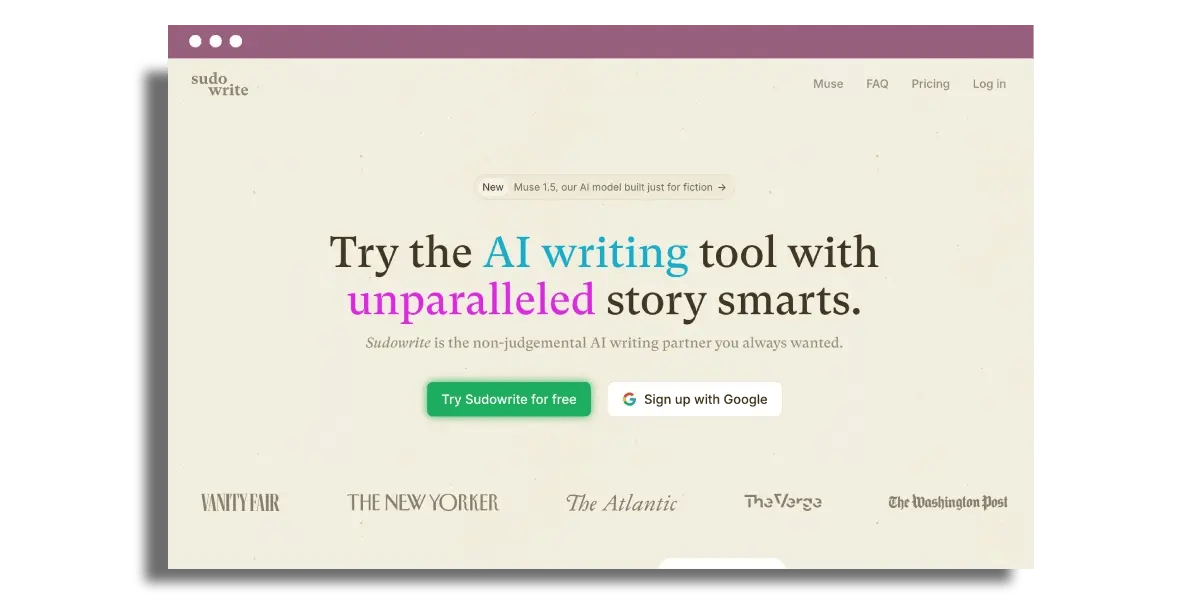
A creative writing assistant for fiction and storytelling, built to help with plot, characters, scene expansion, and voice-preserving rewrites.
Sudowrite emphasizes creative writing assistance that preserves your voice. Sudowrite leans hard into fiction and creative work, so you get tools tuned for stories, not boilerplate marketing copy. The AI is like a brainstorming partner when you’re stuck on plot, pacing, or character arcs. You can request alternate chapter endings, fantasy novel side quests, or fresh romance subplot conflicts. Its flexibility across genres is a major strength. It works with mystery, sci-fi, literary, fan fiction, and more without locking you into one “house style.
Best for
- Fiction writers and creative storytellers
- Writers who want help breaking through plot/scene writer’s block
What it does
- Generate plot ideas, twists, and alternate scene directions
- Expand scenes with sensory detail and stronger imagery
- Improve dialogue flow and character-specific voice
- Keep lore, characters, and world notes alongside the manuscript
Strengths
- Excellent for creative ideation and scene-level expansion
- Good at offering multiple stylistic options to choose from
- Story-world tooling reduces tool-hopping (notes + draft together)
Limitations
- Not designed for strict factual writing or brand copy
- Can over-embellish—needs your taste and restraint to stay true to voice
Pricing snapshot
- Free plan: Typically no (trial/limited sometimes)
- Paid plans: Credit-based/tiered (varies)
Use case: Best when you’re drafting stories and need a creative partner to generate options - without replacing your voice or narrative choices.
To smooth prose, Sudowrite lets you concoct evocative details, conversations, and scene shifts around your existing text. For instance, you could paste in a lifeless paragraph like ‘The city was bustling at night’ and then request sensory details from Sudowrite. It can provide versions emphasizing sound, smell, or mood, so you get choices that fit your vibe.
Dialogue support lends a hand when the back and forth becomes stiff. You provide a short context, and the AI proposes dialogue that sounds natural for particular characters, not generic speakers. Poetry and short-form pieces gain from this, as you can ask for rewording that preserves your flow while trimming the language.
Writing and editing feel more directed when you already have a draft, outline or story context to work from. Sudowrite examines your style and provides rewrites that attempt to stick close to your voice. Others use it as a “first pass” editor for longer manuscripts to smooth clunky sentences and keep tone consistent from chapter 1 to chapter 30.
Real-time feedback, creative prompts, and various rewrite modes enable you to navigate early drafts more swiftly, particularly when writer’s block strikes and you’re left with just a rough sketch on the page.
You can even save and structure your story world right in the platform. Lore notes, character sheets, relationship maps, and plot outlines sit next to your chapters, minimizing tool-hopping between notes apps and your manuscript. Scene-building enables you to outline beats for a chapter, then grow them out into full scenes with AI assistance.
The interface is pretty intuitive, so you don’t waste time figuring out where things live. They have plans with credit rollover for up to 12 months and simple cancellation with access to projects remaining, so this provides some budget flexibility for long drafting cycles.
6. Rytr
Then Rytr provides you a quick, nimble method to create draft copy without struggling with a convoluted interface. It's a lightweight, budget-friendly AI writer for quick drafts across many use cases, tones, and languages.
Best for
- Solo operators and small teams on a budget
- Anyone needing quick first drafts for common marketing and business writing
What it does
- Generate short-form copy (emails, ads, bios, sections of blogs)
- Select use cases and tones to guide structure
- Support multiple languages for quick localization drafts
- Bulk generation for lists of products/variants (plan dependent)
Strengths
- Simple interface and low friction to start drafting
- Good coverage of common formats with minimal setup
- Affordable entry point for routine writing tasks
Limitations
- Quality can be uneven for nuanced or technical topics
- Still needs editing to avoid generic phrasing and repetition
Pricing snapshot
- Free plan: Often available with limits
- Paid plans: Lower-cost tiers that expand usage and features
Use case: Best when you want fast, inexpensive drafting for routine content, then you polish in a stricter editor or brand voice review.
Rytr accelerates common content such as blog paragraphs, cold emails, and short ads using an intuitive editor and straightforward workflows. You select a use case, enter a brief, and the platform writes in a clean workspace that never feels crowded. For instance, you could select a “Blog Section Writing” use case, paste a one to two sentence outline, and receive three alternatives for a 300-word section within seconds.
That speed suits those times when you just want a place to begin and don’t want to set up a whole content project. You have versatility across tones, languages, and content formats. Rytr has over 40 pre-made use cases, including things like YouTube video ideas, interview questions, and product descriptions, as well as some more unusual ones such as ‘Business Ideas’ or a ‘Profile Bio.’
On paid plans, you can create custom use cases built to your own templates — say, a specific outreach format your sales team uses. Tones include “Casual” and “Convincing,” along with more specific choices such as “Urgent,” which can be effective for limited-time offers or cart-abandonment emails. If your audience is international, you can produce in multiple languages to trial localized versions of the same communication.
For higher volumes, bulk writing features can generate multiple pieces in one workflow. You can provide Rytr with a list of product names and features, and it churns out description variants in a single swoop. That’s perfect for catalog updates, ad set testing, or writing dozens of outreach lines.
The catch is that several users find Rytr’s workflow and navigation to be somewhat clunky, so you might have to do a bit of trial and error to integrate it into a hectic content pipeline. The editor also includes proofreading and optimization features to help tighten generated drafts.
Rytr can point out grammar issues, propose clearer wording, and generate keyword suggestions based on your subject. It analyzes readability and offers suggestions to tweak structure and flow, like shortening long sentences or rearranging bullet points. Some basic SERP analysis is available as well, but you have to switch that on before it begins adding insights.
The platform even creates AI images, so you can accompany a brief blog snippet or social post with a distinctive visual without having to open a separate design application. Pricing remains affordable. Its free plan extends up to 10,000 characters per month, which can suffice for light testing or sporadic usage.
Paid Saver and Unlimited plans eliminate most limits and unlock custom use cases. This makes more sense once Rytr is a part of your normal workflow.
7. Quillbot
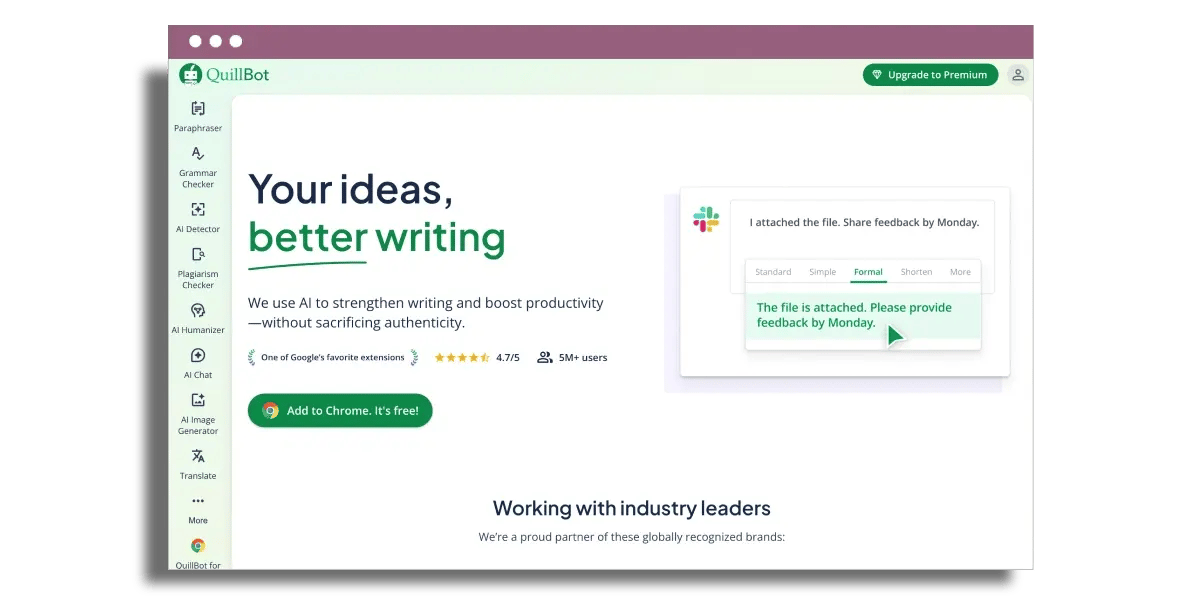
QuillBot is a rewriting and summarizing tool focused on paraphrasing, simplifying, and citation support for students and content repurposing. Originally launched in 2017 and expanded rapidly in academic and research circles. You get a solid paraphrase engine good for essays, reports, and content repurposing.
Best for
- Students and researchers rewriting or summarising source material
- Marketers repurposing long articles into shorter formats
What it does
- Paraphrase text in different modes (formal, academic, simple)
- Summarise long articles into shorter notes or bullets
- Grammar and vocabulary suggestions for clearer writing
- Citation generation (plan dependent) and workflow extensions
Strengths
- Strong for rewriting and reducing redundancy
- Useful summarizer for speeding up reading-to-notes workflows
- Good for repurposing content into new formats and lengths
Limitations
- Free plan has tighter limits for longer texts
- Paraphrasing still needs human review for nuance and accuracy
Pricing snapshot
- Free plan: Yes (limited word counts/features)
- Paid plans: Expand limits + add advanced tools (varies)
Use case: Best when you need to rewrite, simplify, or summarize material quickly, especially for academic work or content repurposing.
It features 10 rewriting modes - Standard, Formal, Academic, Creative, and more, so you can match tone to context. For instance, you could run a dense research paragraph through Academic mode to get journal style language, then use Standard mode to simplify it for a blog. The free version assists with quick edits, but limits paraphrasing to 125 words per run. Longer papers or full articles generally require the Premium plan.
To make your writing clear and tight, pair the paraphraser with grammar checking, vocabulary suggestions, and sentence restructuring. It can be used to compress long sentences. For example, a sentence like “The main purpose of this study is to explore the possible effects of social media on attention spans” becomes “This study explores the effects of social media on attention spans.”
The sense remains correct, just with a neater construction. Vocabulary choices present synonyms, but you retain final control, which is important when dealing with technical or academic language.
For workflow, QuillBot integrates with word processors and browsers, which is helpful if you write in Google Docs, MS Word, or directly in your LMS or CMS. Highlight a sentence in your document, pop open the QuillBot extension, and paraphrase or summarize without leaving the page.
Students can use this to refine academic drafts, while marketers can repurpose a long article into shorter formats. It is also useful when multiple contributors have produced copy in noticeably different styles. Certain users have noted intermittent bugs or glitches, so it’s wise to maintain backups of your drafts and verify changes.
On the research front, the integrated citation generator and summarizer excel. QuillBot supports major citation styles including APA, MLA, and Chicago, cutting down on formatting time and supporting academic integrity. Just paste in a URL, title, or DOI and you can output a formatted reference, copying it into your bibliography.
It assists with literature reviews by summarizing lengthy articles into bullet points. Premium features an advanced plagiarism checker and increased word limits, beginning at roughly $9.95 per month. Translation into 45 languages and a side-by-side comparison view facilitate bilingual work and cross-language editing, particularly when you have to check nuance.
8. Wordtune
Wordtune specializes in refining your sentences so they sound clearer and match your tone and objectives. This ai writing tool excels at sentence-level polishing and rewording. You paste or type a line, and the AI pops up with a bunch of alternatives that optimize clarity, flow, structure, and more.
Best for
- Professionals polishing emails, reports, and web copy
- Writers who want better phrasing options without rewriting from scratch
What it does
- Rewrite sentences for clarity and concision
- Adjust tone (more formal, more casual) with alternatives
- Summarise or expand short passages (plan dependent)
- Work inside common editors via browser extensions/add-ins
Strengths
- Great for ‘this is almost right’ rewriting moments
- Makes tone shifts fast for different audiences
- Low learning curve and quick iteration on phrasing
Limitations
- Some suggestions can sound generic or miss nuance
- Free plan typically limits daily rewrites/summaries
Pricing snapshot
- Free plan: Yes (limited usage)
- Paid plans: Increase rewrite/summarise limits + advanced features
Use case: Best when you want rapid improvements in clarity and tone—especially for business writing where small phrasing changes matter.
Transform a clumsy, long-winded sentence such as “Our team is trying to finalize the launch plan” into “Our team is finalizing the launch plan” or “We’re finalizing the launch plan.” The result is more concise while retaining the original meaning. The tool leverages natural language processing (NLP) to understand intent, not just keywords, so suggestions typically remain aligned with what you want to say.
That makes it particularly handy when you need digestible copy for blogs, email campaigns, landing pages, or product docs. Plus it gives you a means to test styles without redoing everything from scratch. For a blog, perhaps you want a casual, colloquial style. For a client report you may require a more formal piece.
Wordtune’s tone adjustment allows you to push copy more ‘casual’ or ‘formal’ and view a few options. For example, a sentence such as “Please be advised that the report has been completed” may be turned into “The report is ready now” for an informal update, or “The report has been completed and is ready for review” for a business email. This adaptability assists you in meeting reader expectations throughout blogs, outreach emails, internal memos, and executive summaries.
Integration seems simple if you already work in popular tools. Browser extensions and add-ons for Google Docs and Microsoft Word inject Wordtune directly into your normal flow, so you receive real-time suggestions in the same window where you type. There’s no requirement to copy text into a standalone editor.
You select text, tap the Wordtune icon, and scroll through on-the-spot rewrites or summaries. That instant feedback and straightforward interface reduce the friction for newer writers and save time for veterans. For productivity and creativity, Wordtune frequently functions like a rapid second set of eyes, serving as a powerful tool for content creators.
It can turn a 200-word update into a short summary or expand a quick note into something more. Among other things, this includes sentence rewriting, tone shifts, grammar correction, and summarization. I know a lot of people use it to correct clunky phrasing, tighten paragraphs, and increase readability.
Others discover that some of the recommendations sound robotic or overlook nuance, so a rapid manual scan still counts. For deeper editing, supplementing Wordtune with a dedicated grammar or style checker can provide more precise polish, particularly on high-stakes reports or academic prose.
There are daily rewrite and summary limits with the free version, so heavier users tend to shift to paid plans or mix and match tools, utilizing the best AI content generation tools available.
Which AI writing assistant should you choose?
The best AI writing assistant is the one that removes a specific bottleneck from your workflow. Grammarly and Wordtune make sense when the draft already exists and you want clearer, cleaner writing. Jasper, Copy.ai and Writesonic are more useful when the challenge is producing and repurposing marketing content at scale. Sudowrite serves a very different creative-writing audience, while Rytr offers a lighter entry point and QuillBot specializes in rewriting and summarization.
For a broader comparison of tools specifically aimed at content marketing, copywriting and search, see our guide to the best AI writing tools for content, copywriting and SEO. This guide is focused more narrowly on assistants that improve the day-to-day writing workflow.
Start with one real task you repeat every week and compare the output against your current process. The winner is not necessarily the tool that writes the most. It is the one that saves meaningful time without creating more editing, fact-checking or brand cleanup afterwards.
Frequently asked questions
How can AI-powered writing assistants like Grammarly or Jasper improve your writing?
AI-powered writing assistants can speed up drafting, editing and rewriting while helping improve grammar, clarity and tone. Grammarly is strongest as an editing layer, while Jasper is geared more toward generating and scaling marketing content. Both still require human judgment for accuracy, message and final quality.
Which AI writing tool is best for beginners?
Grammarly is one of the easiest places to start because it works inside common writing environments and explains many of its suggestions as you write. Rytr is another approachable option for people who want help generating simple first drafts without learning a complex content platform.
Can tools like Copy.ai and Writesonic help with marketing content?
Yes. Copy.ai and Writesonic can help produce ads, product descriptions, landing page copy, social posts and other marketing assets. Copy.ai is particularly useful for rapid variations and repeatable workflows, while Writesonic places more emphasis on long-form and SEO-oriented content production.
Are AI writing assistants safe to use for professional work?
They can be used for professional work, but teams should review each provider’s current privacy, security and data-handling policies before sharing confidential information. Avoid putting sensitive client, employee or proprietary data into a writing assistant unless your organization has approved the platform and its settings.
Will AI writing tools replace human writers?
AI writing tools can automate parts of drafting, ideation, rewriting and editing, but they do not remove the need for human judgment, subject expertise, originality or accountability. Their strongest role is usually accelerating parts of the writing process rather than owning the finished work end to end.
What is the difference between Quillbot and Wordtune?
QuillBot is more focused on paraphrasing, summarizing and research-oriented rewriting, while Wordtune is particularly useful for improving individual sentences, clarity and tone. QuillBot is the stronger fit for transforming source material; Wordtune is useful when your own draft is almost right but the phrasing needs work.
Can AI tools like Sudowrite help with creative writing?
Yes. Sudowrite is built specifically around fiction and creative writing. It can help brainstorm plots, develop scenes, explore character ideas and generate alternative directions when a draft stalls, while leaving the writer responsible for voice, taste and narrative decisions.
Best AI writing tools for content, copywriting & SEO
Discover the best AI writing tools for content, copywriting, and SEO that elevate your writing efficiency and creativity.

Choosing an SEO tool? Read this first
Find the SEO tool that actually fits your business - with expert, unbiased guidance.

9 Best Lead Generation Tools in 2026: Compared
Here's the best lead generation tools of 2026 that elevate your strategy and drive conversions like never before.